

GET MORE INFORMATION
What Does “Grandfathered” Really Mean on a Muskoka Waterfront Property?
What Does “Grandfathered” Really Mean on a Muskoka Waterfront Property?
When buying a Muskoka waterfront property, you may hear someone say that an older cottage, boathouse, bunkie, deck or other structure is “grandfathered.” It can sound reassuring — as though the structure is automatically protected forever because it has been there for many years.
But buyers should be careful with that word.
“Grandfathered” is commonly used in everyday real estate conversations, but what really matters is the legal and planning status of the property, its uses and its structures. An older building may have been legally established before today's zoning requirements came into effect, but that does not necessarily mean a future owner can enlarge it, substantially alter it, relocate it or rebuild exactly the same thing in exactly the same location.
On Muskoka waterfront, where older cottages and shoreline structures can predate today's planning standards by decades, understanding this distinction can be extremely important before purchasing.
What Does Grandfathered Mean in Muskoka Real Estate?
When people describe something as “grandfathered,” they are generally referring to a use, building or structure that was lawfully established under earlier rules but would not necessarily comply with today's zoning or planning requirements.
Ontario's Planning Act contains protections for certain lawfully existing uses when a subsequent zoning by-law would otherwise prohibit them.
However, the circumstances of each property matter. Buyers should never assume that age alone establishes legal status.
Legal Non-Conforming vs. Legal Non-Complying: What Is the Difference?
These terms sound similar, but they can describe different situations.
Legal Non-Conforming Use
A legal non-conforming use generally refers to a use of land, a building or a structure that was legally established before a newer zoning by-law prohibited that particular use.
For example, a particular use may have been permitted decades ago but may no longer be permitted under the property's current zoning.
Legal Non-Complying Building or Structure
A legal non-complying building or structure generally involves a use that may still be permitted, but the physical building or structure does not meet one or more of today's zoning standards.
Those standards could involve matters such as:
- shoreline setbacks;
- side-yard setbacks;
- building height;
- lot coverage;
- building size;
- location on the lot; or
- other dimensional requirements.
The Township of Muskoka Lakes Planning Department explains that zoning by-laws regulate matters including land and building uses, building locations, lot coverage and building heights. The Township also provides processes such as minor variances and zoning by-law amendments when proposed development does not comply with applicable requirements.
Why Does This Matter So Much on Muskoka Waterfront?
Muskoka contains many cottages that were built long before today's waterfront planning policies and zoning standards existed.
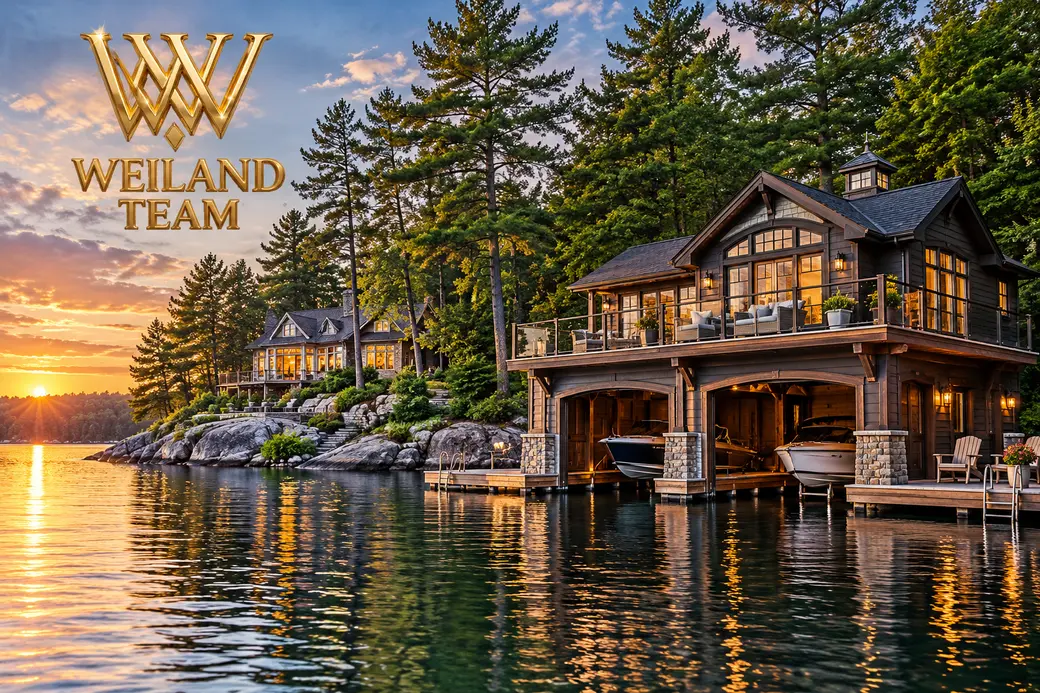
You might encounter an older cottage positioned unusually close to the shoreline, a boathouse that is larger than what might be permitted today, or a sleeping cabin, deck or other structure in a location that would be difficult to reproduce under current requirements.
Those characteristics can be part of what makes an older Muskoka property so appealing.
But they can also make proper due diligence especially important.
Does Grandfathered Mean You Can Rebuild Exactly What Is There?
Not necessarily.
This is one of the most important things Muskoka waterfront buyers should understand.
The fact that an existing cottage or structure has recognized legal status does not automatically mean a buyer has an unrestricted right to demolish it and construct a new building of the same size, shape and location.
Redevelopment, enlargement, extensions, reconstruction and changes in use can trigger different planning and building requirements. Depending on the municipality and the particular proposal, a minor variance, zoning amendment, community planning permit, site plan approval or another approval may be required.
The Township of Muskoka Lakes Official Plan addresses legal non-conforming uses and non-complying structures and contemplates circumstances where extensions or enlargements may require municipal approval.
Before purchasing a property specifically because of an unusual existing footprint, buyers should investigate what could actually be rebuilt or altered.
What If an Older Cottage Is Very Close to the Water?
This is a particularly important Muskoka example.
An older cottage may sit considerably closer to the shoreline than a new cottage could be built today. That proximity can be extremely desirable to a buyer because of the views, connection to the lake and classic cottage experience.
However, if a major renovation or redevelopment is part of your future plans, you should determine what municipal rules would apply before assuming the existing footprint can simply be reproduced.
In other words, buyers should distinguish between:
“This cottage can legally remain where it is today”
and
“I can tear this cottage down and automatically rebuild the same cottage in the same location.”
Those are not necessarily the same thing.
What About Grandfathered Boathouses, Bunkies and Sleeping Cabins?
The same caution applies to accessory structures.
An older Muskoka property might contain:
- a large traditional boathouse;
- living accommodation associated with a boathouse;
- a sleeping cabin or bunkie;
- a shoreline deck;
- an older dock configuration;
- a detached garage;
- a guest structure; or
- another building that predates today's standards.
These structures can add significant lifestyle appeal and sometimes substantial value to a waterfront property. But buyers should establish their legal status rather than relying solely on how long they appear to have existed.
Does an Old Structure Automatically Become Legal Because It Has Been There for Decades?
No. Age by itself should not be treated as proof of legal status.
A structure may be old without having been legally established. There may also be incomplete records, undocumented alterations or differences between what was originally approved and what exists today.
That is why the statement “it's been there forever” should not replace proper investigation.
Never Let the Word “Grandfathered” End the Conversation
If an important feature of a Muskoka property is described as grandfathered, that should be the beginning of your due diligence — not the end of it.
Depending on the property and your plans, questions may include:
- When was the cottage or structure constructed?
- Was it legally established?
- Are building permits or other municipal records available?
- Have additions or alterations been made since the original construction?
- Are there previous minor variances, zoning amendments or site-specific approvals?
- Does an existing survey accurately show the buildings and structures?
- What is the current zoning or planning designation?
- What could be renovated or enlarged?
- What could be reconstructed if the existing building were removed?
- Would a proposed redevelopment require additional municipal approval?
How Can Buyers Research a Muskoka Property?
The appropriate municipality is an important starting point because planning regulations differ across Muskoka.
For properties in the Township of Muskoka Lakes, buyers can review the Township's Planning information and zoning resources. The Township provides information about zoning, minor variances, zoning by-law amendments and previous planning applications.
The Township of Muskoka Lakes Property Development resources also explain how to confirm zoning and review applicable development requirements.
At the provincial level, Ontario's Planning Act provides the legislative framework governing zoning and legal non-conforming uses in Ontario.
Depending on the property, buyers may also want advice from their real estate lawyer, municipal planning or building staff, a professional planner, surveyor, building professional or other qualified specialist.
Could Grandfathered Features Add Value to a Muskoka Property?
Potentially, yes.
An older cottage located close to the shoreline or an established waterfront structure that could not easily be duplicated under today's rules may contribute considerably to a property's appeal.
But its value should be considered together with its verified legal status and the buyer's future plans.
A buyer who loves an existing cottage exactly as it is may evaluate the property very differently from someone intending to undertake a major redevelopment.
What Should You Know Before Making an Offer?
If a grandfathered or legally non-conforming/non-complying feature is important to your decision to purchase, consider making its status part of your due diligence before becoming firmly committed to the property.
Your real estate lawyer can help determine appropriate legal searches and conditions, while municipal planning and building departments can help clarify applicable regulations and available property records.
The goal is not to be frightened by an older cottage or unusual shoreline structure. Many of Muskoka's most charming waterfront properties are older properties.
The goal is simply to understand exactly what you are buying.
Frequently Asked Questions About Grandfathered Muskoka Waterfront Properties
What does grandfathered mean on a Muskoka cottage?
It commonly refers to an existing use, building or structure that was legally established under earlier rules but may not conform or comply with today's planning or zoning requirements. The property's actual legal status should be verified rather than assumed.
Can I renovate a grandfathered Muskoka cottage?
Possibly, but the extent of permitted renovation or enlargement depends on the property, municipality, existing structure and proposed work. Municipal planning and building approvals may be required.
Can I tear down a grandfathered cottage and rebuild it in the same place?
Do not assume that you can. Reconstruction or redevelopment can be subject to current planning requirements and may require municipal approvals. This should be investigated before purchasing if redevelopment is part of your plan.
Is a cottage automatically grandfathered because it is old?
No. Age alone does not establish legal status. Buyers should investigate when and how buildings, structures and uses were established and whether relevant municipal approvals or records exist.
Can a Muskoka boathouse be grandfathered?
An older boathouse may have legal status even though its dimensions or location would not necessarily meet today's requirements. However, that does not automatically establish what can be enlarged, altered or reconstructed in the future.
Who can confirm whether something is legally grandfathered?
The appropriate municipal planning and building departments are important sources of information. Depending on the issue, a real estate lawyer, professional planner, surveyor or other qualified professional may also be involved in confirming the property's status and advising the buyer.
Should I buy a Muskoka cottage with legal non-conforming or non-complying structures?
Such a property is not automatically a problem. In fact, some older waterfront properties have highly desirable features that would be difficult to reproduce today. What matters is understanding the legal status, restrictions and future development possibilities before making your decision.
The Weiland Team Perspective
One of the things we have learned about Muskoka waterfront real estate is that two properties that look similar on paper can have very different histories and very different possibilities for the future.
When Mark & I walk a waterfront property with buyers, we look beyond the view and the cottage itself. We think about how the property will actually be used, what features matter most to the buyer and whether their future plans align with what may be possible on that particular lot.
An older cottage close to the water, a traditional boathouse or a charming sleeping cabin may be one of the reasons you fall in love with a property. Those features can be incredibly special. But if they are an important part of the property's value to you, they deserve proper investigation.
In Muskoka real estate, “grandfathered” should never mean “don't worry about it.” It should mean: let's understand exactly what exists, why it can exist, and what you may be able to do with it in the future.
Thinking About Buying a Muskoka Waterfront Property?
Whether you are considering an older cottage, a legacy family property or a waterfront property with unusual existing structures, careful due diligence can help you understand both the opportunities and the limitations before you buy.
Mark & I would be happy to help you navigate the questions that are unique to Muskoka waterfront real estate.
Your Muskoka Dream Starts With The Weiland Team.
About the Weiland Team
The Weiland Team with eXp Realty helps buyers and sellers navigate luxury and waterfront real estate throughout Muskoka, including Lake Muskoka, Lake Rosseau, Lake Joseph, Lake of Bays, Huntsville, Bracebridge, Gravenhurst, Muskoka Lakes and surrounding cottage communities.
With Dee Dee's background in interior design, staging and luxury real estate and Mark's extensive business and negotiation experience, we bring a practical, lifestyle-focused approach to helping clients understand not only what a Muskoka property looks like today, but how well it may work for their plans in the years ahead.
Learn more at LuxuryMuskokaRealEstate.com.
This article is provided for general informational purposes only and is not legal, planning, building or engineering advice. Regulations and property circumstances vary. Buyers should obtain advice from the appropriate municipality, their lawyer and other qualified professionals regarding a specific property.
Categories
Recent Posts