

GET MORE INFORMATION
What Buyers Need to Know About Wildfire Risk, Forest Management, and Emergency Preparedness in Muskoka

What Buyers Need to Know About Wildfire Risk, Forest Management, and Emergency Preparedness in Muskoka
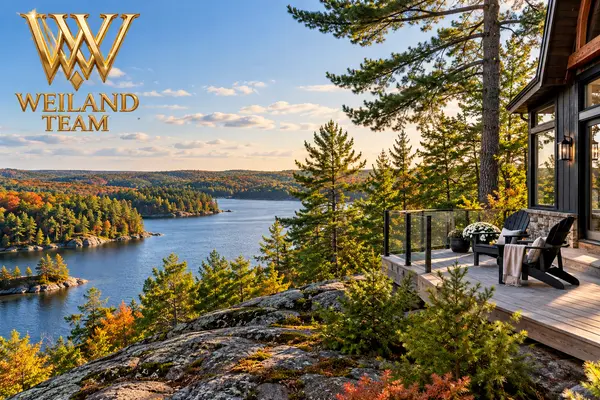
When buyers picture owning a cottage in Muskoka, they often imagine towering pines, granite outcroppings, quiet shorelines, and the privacy that comes with being surrounded by nature. Those same beautiful forested surroundings, however, are also something buyers should understand from a property-management and emergency-preparedness perspective.
Wildfire risk does not mean buyers should be afraid of purchasing a forested Muskoka property. It means they should understand the land around the cottage, how the property has been maintained, how emergency services can access it, and what practical steps can help reduce risk.
For buyers considering a waterfront cottage, rural property, island property, or heavily wooded acreage in Muskoka, wildfire preparedness should simply become another part of thoughtful waterfront due diligence.
Is Wildfire Risk Something Muskoka Cottage Buyers Should Consider?
Yes. Ontario has large areas where homes and cottages are located within or adjacent to forests. These areas are sometimes described as the wildland-urban interface — places where buildings and forested landscapes meet.
The level of wildfire exposure can vary significantly from one property to another. A cottage surrounded by dense evergreen vegetation, accumulated deadfall, dry ground cover, and limited road access may present very different considerations from a cottage with well-managed vegetation, good separation between trees and structures, and easy emergency access.
Rather than asking only, “Is this property in a forested area?” buyers should look more closely at how the property and surrounding vegetation are managed.
What Should Buyers Look for Around the Cottage?
When walking a Muskoka property, buyers should look beyond the cottage itself and pay attention to the surrounding landscape.
Some questions worth considering include:
- How close are mature trees to the cottage?
- Are there dense evergreen trees immediately surrounding the buildings?
- Is there significant deadfall, brush, dry vegetation, or accumulated pine needles?
- Are branches touching or hanging over the roof?
- Is firewood stored against or immediately beside the cottage?
- Are gutters and roof areas likely to collect leaves and needles?
- Is combustible material stored underneath decks?
- Are detached structures, bunkies, sheds, garages, and boathouses surrounded by vegetation?
- Does the property have steep terrain that could complicate access?
None of these observations automatically makes a property unsuitable. They may simply identify areas where improved property maintenance or forest management would be beneficial.
What Is the FireSmart Home Ignition Zone?
FireSmart Canada encourages property owners to think about the area surrounding a home in different priority zones.
The most immediate area extends approximately 0 to 1.5 metres from the building. FireSmart recommends creating a non-combustible area immediately surrounding the home and attached structures.
The next area, approximately 1.5 to 10 metres from the building, focuses on managing vegetation and combustible materials so that fire is less likely to spread toward the structure.
From approximately 10 to 30 metres, selective thinning, pruning, removal of dead vegetation, and spacing of certain trees can help reduce the intensity of a potential wildfire approaching the property.
This does not mean clearing a beautiful Muskoka property of its trees. Thoughtful forest management can often maintain the privacy and natural character buyers love while reducing unnecessary combustible material around structures.
Does Forest Management Mean Cutting Down All the Trees?
No. In fact, indiscriminate tree removal is generally not the objective.
Good forest management is about understanding vegetation, spacing, dead material, tree health, and the relationship between the forest and the structures on the property.
Depending on the property, management might include:
- removing dead or unhealthy trees;
- clearing accumulated dead branches and vegetation;
- pruning lower branches;
- creating greater separation between dense evergreen trees;
- keeping vegetation away from buildings;
- maintaining access routes; and
- working with a qualified arborist or forestry professional when appropriate.
Buyers should also remember that tree removal or vegetation alteration may be regulated depending on the municipality, shoreline location, development agreement, environmental designation, or other property-specific restrictions. Before undertaking significant clearing, owners should confirm what permissions may be required.
Why Does Emergency Vehicle Access Matter?
Emergency access is an important consideration for many rural and waterfront Muskoka properties — not only because of wildfire.
During a showing, buyers should consider whether emergency vehicles can reasonably reach the cottage.
Look at:
- the width and condition of the driveway;
- tight corners;
- low branches;
- steep grades;
- turnaround space;
- gates or restricted entrances;
- private road conditions;
- seasonal road maintenance; and
- whether the civic address is clearly visible from the road.
A long, narrow, heavily treed driveway may feel wonderfully private, but buyers should also think practically about how fire trucks, ambulances, maintenance vehicles, propane delivery trucks, and other large vehicles would access the property.
What About Private Roads and Seasonal Roads?
Many Muskoka cottages are reached by private roads, association roads, shared driveways, or seasonally maintained roads.
Buyers should understand who maintains the road, whether there is a road association, how costs are shared, whether winter maintenance is provided, and whether there are any known limitations affecting emergency access.
This is particularly important if the cottage is intended for four-season use.
A beautiful remote location can still be an excellent property, but buyers should understand the practical realities that come with that privacy.
What Should Buyers Know About Island Properties?
Island cottages have different emergency-planning considerations because road access is obviously unavailable.
Buyers should understand how emergency response works in the particular area, where the closest marina or mainland access point is located, and how quickly the property can be reached by boat.
Owners should also think about reliable communication, emergency supplies, boat availability, weather conditions, and what they would do if an evacuation became necessary.
This is another example of why buying an island cottage requires a slightly different form of due diligence than purchasing a road-access waterfront property.
Should Buyers Consider the Cottage's Building Materials?
Yes. The condition and construction of the cottage can influence its vulnerability to wildfire.
FireSmart guidance encourages homeowners to consider features such as roofing, siding, decks, vents, soffits, windows, doors, and areas where embers could potentially collect.
For an older Muskoka cottage, buyers may want to consider whether future renovations could incorporate more fire-resistant materials.
This does not necessarily mean immediately replacing perfectly functional components. It means wildfire resilience can become one consideration when roofs, siding, decks, landscaping, or other exterior elements eventually require replacement.
Does a Metal Roof Eliminate Wildfire Risk?
No. A metal roof can be one useful fire-resistant building feature, but wildfire preparedness involves the entire property.
Embers can collect in gutters, under decks, around vegetation, beside buildings, and in other combustible areas.
That is why buyers should look at the cottage, landscaping, vegetation, accessory structures, and surrounding forest as one interconnected environment.
Should Buyers Ask About Water Sources for Fire Protection?
It can be worthwhile, particularly for remote properties.
A waterfront cottage obviously has a significant nearby water source, but buyers should not assume that simply being located on a lake eliminates wildfire concerns.
Emergency response capabilities, equipment access, shoreline conditions, elevation changes, road access, and the location of structures all matter.
If a buyer has specific concerns about fire protection for a property, the appropriate local fire department can be an excellent source of property-specific information.
How Important Is Emergency Preparedness at a Muskoka Cottage?
Emergency preparedness is particularly important at recreational and rural properties because owners and guests may be farther from services than they are at their primary residence.
The District Municipality of Muskoka maintains emergency-management planning and public education resources for residents and visitors.
Cottage owners should have a basic plan that considers:
- how everyone would leave the property;
- alternate evacuation routes where available;
- how family members would communicate;
- where vehicles and boat keys are kept;
- how pets would be evacuated;
- what essential medications and documents would need to be taken;
- where emergency supplies are stored; and
- how guests unfamiliar with the property would respond during an emergency.
What Should Be in a Cottage Emergency Kit?
A well-prepared Muskoka cottage should have emergency supplies appropriate for the property and the number of people who regularly use it.
Depending on the location and season, this could include drinking water, non-perishable food, flashlights, batteries, portable chargers, a battery-powered or crank radio, first-aid supplies, medications, blankets, basic tools, copies of important contact information, and supplies for pets.
Owners of more remote cottages may reasonably choose to keep additional supplies.
What About Power Outages and Communications?
Power outages can accompany severe weather and other emergencies in cottage country.
Buyers should understand how the property functions without electricity.
Consider:
- whether the property has a generator;
- what systems the generator powers;
- whether the water system operates during an outage;
- whether cellular service is reliable;
- whether internet service continues during a power failure; and
- whether there is an alternative method of communication.
These questions are particularly important for buyers planning to work remotely or use the cottage year-round.
Can Wildfire Risk Affect Cottage Insurance?
Insurance should be investigated before a purchase becomes firm.
Insurers consider numerous factors when determining whether they will insure a property and what coverage or premiums may apply. Rural location, construction, heating systems, access, proximity to fire protection, property use, and other characteristics may all be relevant.
Every property and insurer is different, so buyers should obtain property-specific insurance advice rather than assuming that coverage for one Muskoka cottage will be identical to another.
This is one reason we encourage waterfront buyers to investigate insurance early in their due-diligence process.
Can Buyers Check Current Wildfire Conditions in Ontario?
Yes. The Government of Ontario provides information about forest fires, current conditions, fire restrictions, and wildfire safety.
Conditions can change throughout the season, particularly during extended periods of hot, dry weather. Cottage owners should pay attention to provincial information as well as municipal fire bans and restrictions.
Are Outdoor Fires and Burning Always Allowed at a Muskoka Cottage?
No. Outdoor burning rules can vary by municipality, season, conditions, and current fire restrictions.
Before having a campfire, burning brush, or conducting other outdoor burning, property owners should check the rules for the municipality in which the cottage is located and determine whether a fire ban or permit requirement is in effect.
Never assume that because outdoor burning was permitted during a previous visit it remains permitted today.
What Should Buyers Ask Before Purchasing a Heavily Forested Muskoka Property?
Before purchasing, buyers may want to ask:
- Has professional tree work or forest management been completed?
- Are there visibly dead or hazardous trees near structures?
- Are there restrictions affecting tree removal?
- How is the driveway maintained?
- Can emergency vehicles reasonably access the property?
- Is the road privately or municipally maintained?
- What happens during a power outage?
- Is there a generator?
- How reliable are cellular and internet services?
- Has the buyer confirmed insurability?
- Where is the nearest fire station or emergency response service?
- Are there multiple ways to leave the property if an evacuation becomes necessary?
Should Wildfire Risk Stop You From Buying a Muskoka Cottage?
For most buyers, wildfire awareness should be viewed as part of responsible property ownership rather than a reason to avoid Muskoka's beautiful forested properties.
Much of what makes Muskoka extraordinary is the relationship between cottages, lakes, granite, and forest.
The objective is not to remove that natural environment. It is to understand the property and manage it responsibly.
A well-maintained forested property with thoughtful vegetation management, good emergency access, appropriate insurance, and an emergency plan can offer exactly the privacy and connection to nature that buyers come to Muskoka to find.
Our Advice to Muskoka Waterfront Buyers
When Mark & I show waterfront properties, we encourage buyers to look beyond the view from the dock.
The shoreline, water depth, exposure, topography, septic system, road access, buildings, neighbouring properties, forest, and surrounding land all contribute to how a cottage will function and what ownership will actually be like.
A magnificent stand of mature trees can add tremendous beauty and privacy to a property. At the same time, buyers should understand how those trees have been maintained, whether there is dead or hazardous vegetation, and what may be required to responsibly manage the property in the years ahead.
Good due diligence isn't about finding reasons not to buy a cottage. It's about understanding exactly what you're buying so that you can enjoy it with confidence.
Frequently Asked Questions About Wildfire Risk and Muskoka Cottages
Is wildfire risk higher for a cottage surrounded by trees?
Dense vegetation and combustible material close to buildings can increase wildfire vulnerability, but the actual risk depends on many factors including vegetation type, property maintenance, terrain, building construction, weather conditions, and surrounding forest.
How much vegetation should be cleared around a cottage?
FireSmart Canada recommends a non-combustible area within approximately 1.5 metres of structures and additional vegetation-management strategies extending outward through the Home Ignition Zone. Property-specific conditions should always be considered before significant vegetation removal.
Should I remove pine and spruce trees from around a Muskoka cottage?
Not necessarily. Selective thinning, pruning, spacing, and removal of dead vegetation may be more appropriate than wholesale tree removal. A qualified forestry professional or arborist can provide advice for a particular property.
Can I cut down trees anywhere on my Muskoka property?
Not automatically. Municipal bylaws, shoreline protections, environmental restrictions, development agreements, or other regulations may affect vegetation removal. Confirm applicable requirements before undertaking significant tree clearing.
Can a waterfront cottage still be vulnerable to wildfire?
Yes. Being located beside a lake does not eliminate wildfire exposure. Vegetation, building materials, terrain, emergency access, and surrounding conditions remain important.
Should I get insurance approval before buying a remote cottage?
Yes. Buyers should investigate insurance during their due-diligence period and obtain advice based on the specific property rather than assuming coverage will be available on the same terms as another cottage.
Where can I learn more about protecting a cottage from wildfire?
Excellent resources are available through FireSmart Canada, the Government of Ontario's FireSmart information, and local municipal emergency and fire services.
Thinking About Buying a Cottage in Muskoka?
Every waterfront property is different. Understanding the lake is important, but understanding the land, access, forest, structures, services, and long-term responsibilities of ownership is equally important.
If you're considering a Muskoka waterfront property, Weiland Team can help you evaluate the bigger picture and identify the questions that should be answered before you make your purchase.
Your Muskoka Dream Starts With The Weiland Team.
This article is intended for general educational purposes and should not be considered legal, insurance, forestry, fire-safety, or municipal planning advice. Property conditions, regulations, insurance requirements, and emergency services vary. Buyers should obtain appropriate professional and municipal advice for the specific property they are considering.
Categories
Recent Posts