

GET MORE INFORMATION
What Buyers Need to Know About Buying an Older Cottage in Muskoka
What Buyers Need to Know About Buying an Older Cottage in Muskoka
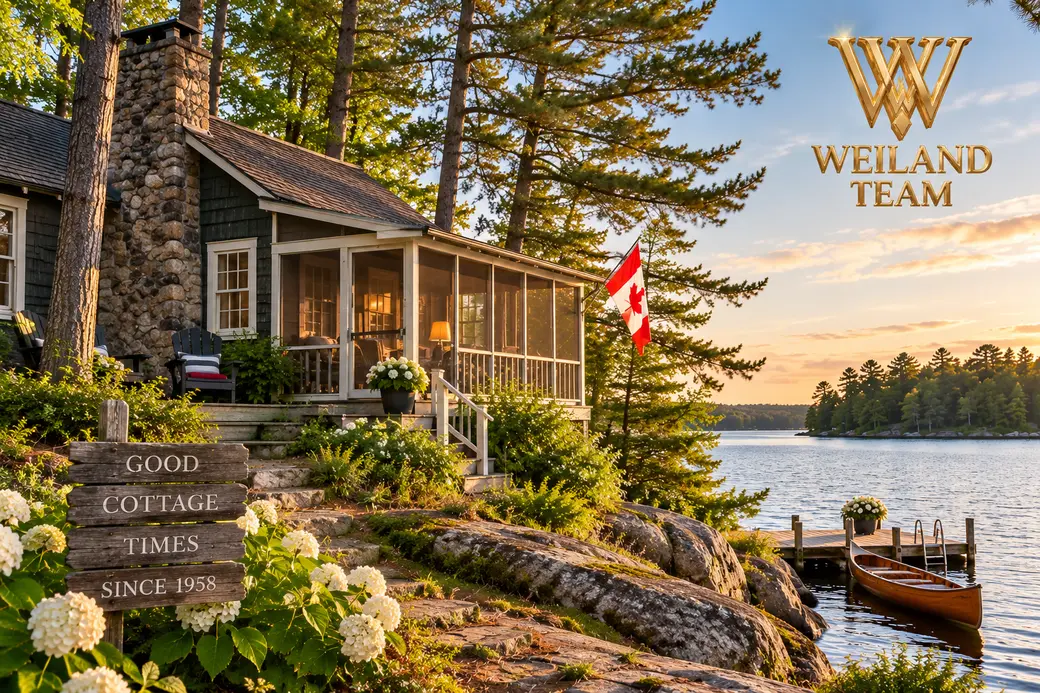
There is something undeniably special about an older Muskoka cottage.
The original woodwork, stone fireplaces, screened porches, mature trees and decades of family history can give an older cottage a character that is difficult to reproduce in a newer build.
But buying an older cottage also requires a different level of due diligence.
Age itself is not necessarily a problem. Many older Muskoka cottages have been exceptionally well maintained and thoughtfully upgraded over the years. The important question is not simply “How old is the cottage?” but rather:
What has been updated, what remains original, and what may need attention in the years ahead?
Older Does Not Automatically Mean Problematic
One of the biggest mistakes a buyer can make is assuming that every older cottage is going to require extensive renovation.
Some older properties have been carefully maintained for generations, with major systems replaced as needed. Others may look beautifully updated cosmetically while still having older electrical, plumbing, septic, structural or insulation systems behind the walls.
This is why buyers should evaluate the cottage as a complete property rather than judging it primarily by appearance.
Start With the Structure
Foundations and structural components deserve particular attention when purchasing an older cottage.
Depending on the age and style of construction, a Muskoka cottage might sit on:
- A full foundation
- A crawl space
- Piers or posts
- Bedrock
- A combination of several foundation types
Buyers should look for signs of movement, moisture, deterioration or previous repairs.
Uneven floors do not necessarily mean there is a serious structural problem in an older cottage, but significant movement, deteriorating supports or ongoing water penetration should be properly investigated.
A qualified home inspector can help identify visible concerns, and in some situations a structural engineer or other specialist may be appropriate.
Water and Moisture Can Be More Important Than Age
In cottage country, water management is extremely important.
Older cottages were not always constructed with the drainage systems, waterproofing materials and building practices commonly used today.
Buyers should pay attention to:
- Water entering basements or crawl spaces
- Spring runoff
- Drainage toward the cottage
- Roof drainage and eavestroughs
- Evidence of previous flooding
- Musty odours
- Visible staining
- Rot around windows, doors and decks
A cottage that has remained dry and well maintained for many decades may present far fewer concerns than a newer property with poor drainage.
Older Electrical Systems Deserve Careful Attention
Electrical systems are one of the most important areas to investigate in an older cottage.
Depending on the age of the property and the renovations completed over the years, buyers may encounter older wiring systems or a combination of old and newer electrical work.
The Electrical Safety Authority notes that older homes may contain wiring methods such as knob-and-tube wiring and recommends that these systems be assessed by a Licensed Electrical Contractor where appropriate.
ESA also notes that some insurance companies may have specific requirements regarding older wiring before providing or renewing coverage.
Learn more from the Electrical Safety Authority about knob-and-tube wiring.
Buyers should also look at the electrical panel, available amperage, grounding, exterior outlets, dock power and whether electrical upgrades appear to have been completed professionally.
Ask About Permits for Renovations and Additions
An older cottage may have been renovated many times over several decades.
Bedrooms may have been added. Porches may have been enclosed. Decks may have been expanded. Bunkies, additions or bathrooms may have been constructed.
That does not automatically mean there is a problem, but buyers should understand what work was completed and whether permits were required and obtained.
The Province of Ontario explains that building permits help ensure construction complies with the Ontario Building Code, municipal zoning and other applicable requirements.
Read Ontario's guide to building permits.
When purchasing an older Muskoka cottage, it can be valuable to ask the municipality what building permit records are available for the property, particularly when substantial additions or renovations are evident.
The Septic System May Be One of the Most Important Components
Many Muskoka cottages rely on private septic systems.
With an older property, buyers should try to determine:
- The approximate age of the septic system
- Its approved capacity
- When it was last pumped
- Whether there are records or permits available
- Whether bedrooms or living space have been added since the septic was installed
- Whether the system shows signs of failure or stress
This becomes particularly important when a cottage has evolved over time.
A property originally built as a modest two- or three-bedroom cottage may now be marketed or used as a much larger family cottage. Buyers should not automatically assume that the septic system was upgraded when the cottage was expanded.
Confirming septic capacity can also be important if you are planning future renovations or additional bedrooms.
Do Not Assume the Number of Bedrooms Tells the Whole Story
Older cottages often change significantly during their lifetime.
A den becomes a bedroom. A porch is enclosed. A bunkie is converted into sleeping accommodation. A lower level is finished.
That additional space can be extremely useful, but buyers should distinguish between how a property is currently being used and what may have been formally approved.
This can affect septic capacity, building permits, insurance and future renovation plans.
Understand the Water Supply
An older Muskoka cottage may obtain water from a drilled well, dug well or sometimes directly from the lake through a treated water system.
Buyers should understand both the source and the treatment system.
For private wells, Ontario recommends regular testing and inspection to help ensure the water remains suitable for drinking.
Learn more about testing and maintaining private wells in Ontario.
If lake water is being used, buyers should understand the filtration and treatment equipment and determine whether the system meets their intended use of the property.
Plumbing Can Reveal the History of the Cottage
Older cottages frequently contain plumbing installed during different generations of renovation.
A buyer may find a mixture of older and newer supply lines, drains, pumps, pressure tanks and water-heating systems.
The key questions include:
- Are there signs of active or previous leaks?
- Has plumbing been upgraded?
- Is the system designed for year-round use?
- Does the cottage need to be winterized?
- Are pipes vulnerable to freezing?
- Where are the shut-offs located?
If you intend to convert a seasonal cottage to year-round use, the plumbing system becomes particularly important.
Seasonal and Year-Round Cottages Are Very Different
Many older Muskoka cottages were originally designed for summer use.
They may have limited insulation, seasonal water systems, older windows or heating systems intended mainly to take the chill off cool evenings.
That can be perfectly acceptable if you plan to use the cottage seasonally.
However, buyers planning Thanksgiving weekends, winter holidays or year-round living should investigate:
- Insulation
- Windows and doors
- Heating systems
- Water lines
- Foundation and crawl-space insulation
- Winter road access
- Snow removal
Converting an older seasonal cottage into a comfortable four-season property can sometimes require substantial investment.
Wood Stoves and Fireplaces Need Their Own Review
Stone fireplaces and wood stoves are part of the charm of many traditional Muskoka cottages.
But older installations should be evaluated carefully.
Buyers may want to confirm whether the fireplace or wood-burning appliance has been inspected and whether their insurer has specific requirements for coverage.
Chimney condition, clearances and previous maintenance are all worth investigating before relying on a wood-burning system.
The Roof, Windows and Exterior Can Become Significant Budget Items
A cottage may be structurally sound and beautifully located but still require substantial capital improvements over the next several years.
Older windows, roofing, siding, decks and exterior stairs can add up quickly.
This does not necessarily make the cottage a poor purchase.
It simply means buyers should understand what they are purchasing and budget accordingly.
When evaluating an older cottage, it can be useful to separate repairs into three categories:
- Items requiring immediate attention
- Items likely to require replacement within several years
- Optional cosmetic improvements
This creates a much clearer picture of the real cost of ownership.
Check the Boathouse, Dock and Waterfront Structures
On an older waterfront property, the cottage itself may not be the only aging structure.
Boathouses, docks, retaining walls, stairs and shoreline structures may also have been built decades ago.
Buyers should consider:
- Structural condition
- Electrical service
- Roof condition
- Cribs or dock supports
- Evidence of movement or deterioration
- Available municipal records
One particularly important Muskoka principle is:
Do not assume that because a structure exists today, it can automatically be rebuilt in exactly the same size, location or configuration in the future.
Current zoning, shoreline regulations and other requirements may affect future redevelopment.
Insurance Should Be Investigated Early
Insurance can become an important part of purchasing an older cottage.
Insurers may ask questions about:
- Electrical wiring
- Heating systems
- Wood-burning appliances
- Roof age
- Plumbing
- Seasonal versus year-round occupancy
- Distance from fire services
The Electrical Safety Authority specifically notes that some insurers may have concerns about older wiring systems such as knob-and-tube wiring.
For that reason, buyers should consider obtaining an insurance quote before becoming unconditional on a purchase whenever the age or systems of the cottage could affect insurability.
A Home Inspection Is Important — But It Has Limits
A professional home inspection can provide valuable information about visible components of an older cottage.
However, an inspection is not the same as opening walls or performing specialized engineering, electrical, septic or environmental testing.
Depending on what is discovered, buyers may need additional advice from:
- A licensed electrician
- A septic contractor
- A structural engineer
- A plumber
- A roofing contractor
- A chimney or wood-burning specialist
- A well or water-treatment professional
The goal is not to find a cottage with absolutely nothing wrong with it.
That may be unrealistic, particularly with an older property.
The goal is to understand the property's condition well enough to make an informed decision.
Do Not Lose Sight of Why Older Muskoka Cottages Are So Desirable
Due diligence is important, but buyers should not overlook the extraordinary qualities that older cottages can offer.
Many were built on waterfront lots that would be extremely difficult to duplicate today.
They may offer:
- Exceptional privacy
- Mature trees
- Beautiful natural shoreline
- Traditional Muskoka architecture
- Large porches
- Original stone fireplaces
- Established landscaping
- Prime lake exposure
- Generational character and history
Sometimes the most valuable part of an older cottage is not the building itself.
It is the land, the waterfront and the experience the property provides.
Think About Your Long-Term Plans Before You Buy
Before purchasing an older cottage, ask yourself what you ultimately want the property to become.
If you love the cottage exactly as it is and plan to maintain it, your considerations may be very different from those of a buyer planning a major addition or complete redevelopment.
If future renovation or rebuilding is important to you, investigate those possibilities before purchasing rather than assuming they will be available later.
Understanding zoning, setbacks, lot coverage, shoreline regulations, septic capacity and existing structures can be particularly important when redevelopment is part of the plan.
Frequently Asked Questions About Buying an Older Cottage in Muskoka
Is buying an older cottage in Muskoka risky?
Not necessarily. Many older Muskoka cottages have been exceptionally well maintained and upgraded. The important step is understanding the condition of the structure and major systems before purchasing.
Should I always get a home inspection on an older cottage?
A professional inspection can be particularly valuable with an older property because the cottage may contain systems and construction methods from several different periods. Depending on the findings, additional specialist inspections may also be appropriate.
How important is the septic system when buying an older cottage?
Very important. Buyers should investigate the age, condition and approved capacity of the septic system, particularly if bedrooms or living space have been added since the system was originally installed.
Should I worry about old electrical wiring?
Older wiring does not automatically mean the cottage is unsafe, but it should be properly evaluated. The Electrical Safety Authority recommends assessment by a Licensed Electrical Contractor for certain older wiring systems, and insurance requirements should also be investigated.
Can I assume an old addition or bunkie was legally built because it has been there for years?
No. The existence or age of a structure does not by itself confirm its permit or zoning status. Buyers should investigate available municipal records when an addition or accessory structure is important to their purchase decision.
Can I rebuild an existing old cottage or boathouse in exactly the same location?
Not necessarily. Current zoning, setbacks, shoreline regulations and other requirements may affect redevelopment. Buyers considering major future changes should investigate those rules before purchasing.
What should I budget for when buying an older cottage?
In addition to the purchase price, consider future costs for roofing, windows, electrical upgrades, plumbing, septic work, heating systems, docks, boathouses, decks and other capital improvements that may be approaching the end of their useful life.
Is an older seasonal cottage easy to convert to year-round use?
Sometimes, but not always. Insulation, plumbing, heating, foundation construction, windows and winter access should all be evaluated before assuming that a seasonal cottage can easily become a four-season property.
Thinking About Buying an Older Cottage in Muskoka?
An older Muskoka cottage can offer something increasingly difficult to reproduce: character, history, mature surroundings and an exceptional waterfront setting.
The key is knowing what you are buying.
The Weiland Team helps buyers look beyond the photographs and consider the complete property — including the cottage, waterfront, septic system, access, shoreline structures, potential future improvements and the questions that should be investigated before a purchase becomes firm.
Our goal is not to discourage buyers from older cottages. In many cases, these are some of the most remarkable properties in Muskoka.
Our goal is to help buyers understand both the opportunities and the potential costs so they can make a confident, informed decision.
Your Muskoka Dream Starts With The Weiland Team.
Weiland Team | eXp Realty
Luxury Muskoka Real Estate
Serving Muskoka, Lake of Bays, Huntsville, Bracebridge, Gravenhurst, Muskoka Lakes and surrounding cottage country.
Categories
Recent Posts