


GET MORE INFORMATION
What Sellers Need to Know About Selling a Waterfront Property vs. a Non-Waterfront Home in Muskoka
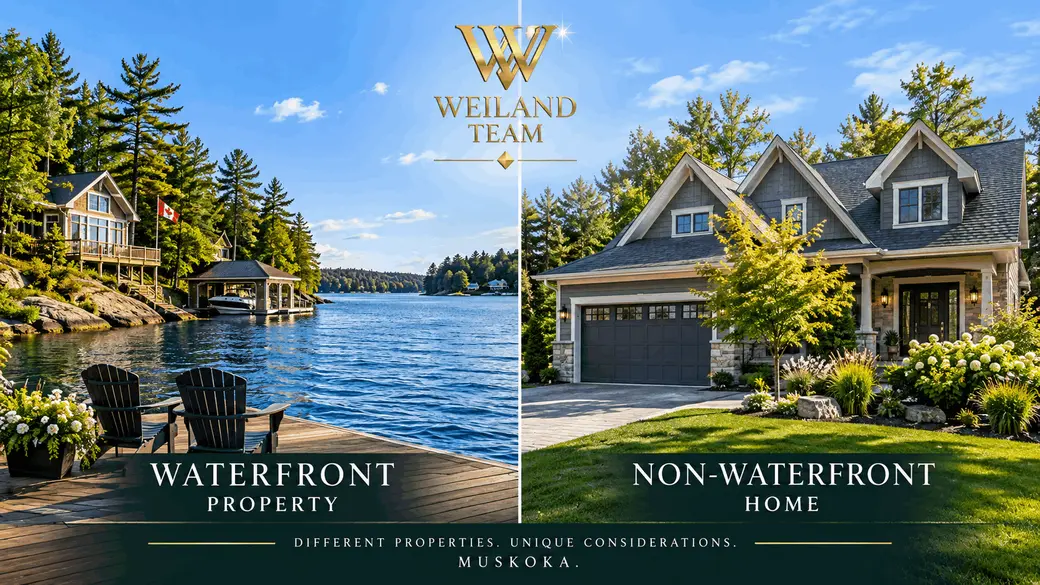
What Sellers Need to Know About Selling a Waterfront Property vs. a Non-Waterfront Home in Muskoka
Selling a waterfront property in Muskoka is not the same as selling a non-waterfront home.
Both require accurate pricing, strong presentation, professional marketing and careful negotiation.
But waterfront properties introduce additional considerations that can affect value, buyer interest, due diligence, marketing strategy and even the questions buyers ask before making an offer.
For sellers throughout Muskoka, Lake of Bays, Huntsville, Bracebridge, Gravenhurst and Muskoka Lakes, understanding these differences can help ensure the property is positioned properly from the beginning.
Waterfront Buyers Are Evaluating More Than the House
When buyers consider a non-waterfront home, they are usually focused primarily on the house itself, the lot, neighbourhood, location, condition and comparable sales.
When they consider waterfront, they are evaluating all of those things plus the lake and shoreline.
That means buyers may be considering:
- Water depth
- Shoreline type
- Exposure and sunsets
- Swimming conditions
- Boat access
- Dock and boathouse condition
- Privacy
- Neighbouring properties
- Road access
- Original Shore Road Allowance ownership
- Septic system capacity and condition
- Water source
- Topography and access to the lake
- Boating traffic and wake
Two cottages with similar square footage can therefore have very different values because the waterfront itself can materially affect buyer demand.
The Waterfront Is Part of the Product
With a traditional home, a seller may be able to substantially improve the property's appeal through interior updates, landscaping and staging.
With waterfront, the lake experience is a major part of what is being sold.
A beautifully renovated cottage with limited privacy, difficult water access or less desirable shoreline characteristics may compete differently from a more modest cottage with exceptional frontage, deep water, privacy and a highly desirable exposure.
This is why pricing waterfront property requires more than simply comparing bedrooms, bathrooms and square footage.
The entire waterfront package needs to be considered.
Comparable Sales Require More Interpretation
Comparable sales are important in every real estate transaction.
But waterfront comparables often require considerably more interpretation.
A seemingly similar cottage may be on a different lake, have a very different shoreline, greater privacy, deeper water, better exposure or a different type of road access.
Even two neighbouring properties can vary significantly depending on:
- Frontage
- Lot shape
- Shoreline quality
- Water depth
- Sun exposure
- Elevation
- Docking
- Boathouse rights
- Privacy
- Septic capacity
- Access
This means the pricing process for waterfront should account for characteristics that may not appear on a standard MLS comparison.
Waterfront Sellers Should Expect More Property-Specific Questions
Buyers considering a Muskoka cottage often ask detailed questions before making an offer.
They may want to know:
- How old is the septic system?
- How many bedrooms is the septic approved for?
- Is the water drawn from the lake or supplied by a well?
- Is the Original Shore Road Allowance owned?
- Are the dock and boathouse permitted?
- What is the water depth at the end of the dock?
- Is there road access year-round?
- Who maintains the road?
- How much boat traffic is there?
- Are there easements or rights-of-way?
- Has flooding or shoreline erosion occurred?
The more information a seller has available before listing, the easier it can be to answer buyer questions confidently and accurately.
Accurate Property Information Matters
The Real Estate Council of Ontario's Seller's Checklist advises sellers to ensure that property information used in a listing is accurate and supported where possible by documentation.
This is important for every property, but waterfront listings often contain additional details that should be confirmed carefully.
These may include frontage, lot dimensions, renovations, taxes, access, waterfront characteristics, structures and other property-specific information.
RECO also reminds real estate professionals to verify key listing details and confirm legal status through appropriate sources where necessary.
Helpful resource: RECO — Verifying Property Information and Listing Accuracy
Original Shore Road Allowance Can Be Important
One issue unique to many waterfront properties is the Original Shore Road Allowance, often called the OSRA or shore road allowance.
Depending on the property, the strip of land immediately adjacent to the water may not be part of the owner's title.
This can affect certain shoreline projects and may become an important question during a sale.
In July 2026, the Township of Muskoka Lakes advised waterfront owners that updated policies may affect projects such as boathouses, stairs, railings, gazebos and retaining walls where the Original Shore Road Allowance is not owned.
For a seller, knowing the status of the shore road allowance before listing can help reduce uncertainty later in the transaction.
Septic Systems Can Affect Marketability
Many non-waterfront homes in Muskoka are connected to municipal services, although some also rely on septic systems and wells.
Waterfront cottages, however, frequently rely on private septic systems.
Buyers may want information about:
- Age of the system
- Location of the tank and bed
- Approved bedroom capacity
- Maintenance history
- Recent pumping
- Repairs or replacement
- Permits and inspection records
If a cottage has been expanded over the years, sellers should not automatically assume that the septic system was also upgraded to accommodate additional bedrooms.
Understanding the system before listing can help avoid surprises during buyer due diligence.
Water Source Is Another Waterfront-Specific Consideration
Many cottages draw water directly from the lake, while others rely on wells or alternative systems.
Buyers may ask about:
- Filtration
- UV treatment
- Seasonal versus year-round use
- Winterization
- Water testing
- System maintenance
A seller does not need to be an expert in every component, but having accurate information available can make the property easier for buyers to evaluate.
Dock and Boathouse Condition Can Influence Value
At a non-waterfront home, a detached garage or outdoor structure may be important.
At a waterfront property, the dock and boathouse can be major lifestyle features.
Buyers may pay close attention to:
- Condition
- Size
- Water depth
- Boat capacity
- Location
- Permits
- Shoreline access
- Replacement possibilities
A well-maintained dock and boathouse can significantly enhance the appeal of a waterfront listing.
Conversely, a structure requiring substantial work may become part of the buyer's negotiation.
Presentation Is Different Too
Staging a non-waterfront home usually focuses heavily on the interior and immediate exterior.
For a waterfront property, the presentation should extend all the way to the lake.
Sellers should think about:
- Dock presentation
- Outdoor seating
- Muskoka rooms and screened porches
- Waterfront pathways
- Stairs
- Decks
- Views from inside the cottage
- Boathouse appearance
- Shoreline clutter
The buyer should be able to imagine not only living in the cottage, but living the Muskoka lifestyle.
Photography and Marketing Should Tell a Different Story
Waterfront marketing should not rely exclusively on interior photographs.
The listing should communicate the relationship between the cottage and the lake.
That may include:
- Wide waterfront views
- Dock and shoreline photography
- Aerial images where appropriate
- Sunset or exposure photography
- Boathouse and docking
- Outdoor entertaining areas
- Views from principal rooms
For a non-waterfront home, location and neighbourhood may play a larger role in the marketing story.
For a waterfront property, the lifestyle and the waterfront characteristics should be clearly communicated.
Seasonality Can Affect the Selling Strategy
Waterfront properties can show very differently depending on the season.
A dock, shoreline and landscaping may be far easier for buyers to appreciate during spring, summer or early fall than in winter.
Some properties still sell successfully in the off-season, but the marketing strategy may need to rely more heavily on strong seasonal photography, video and detailed information.
Non-waterfront homes may also experience seasonal changes in buyer activity, but their physical features are usually less dependent on seeing the lake and shoreline under ideal conditions.
Waterfront Buyers Often Conduct More Extensive Due Diligence
A buyer purchasing a traditional home may focus primarily on financing, inspection, title and standard property considerations.
A waterfront buyer may investigate additional issues such as:
- Septic system
- Water source
- Shore road allowance
- Dock and boathouse legality
- Road access
- Rights-of-way
- Flooding
- Shoreline erosion
- Water depth
- Lake access
This does not mean a waterfront sale has to be difficult.
It simply means sellers benefit from being prepared.
The Buyer Pool Can Be Different
Waterfront buyers may be purchasing:
- A seasonal cottage
- A year-round residence
- A family legacy property
- A recreational retreat
- A luxury second home
Some may live locally, while others may be coming from the Greater Toronto Area, elsewhere in Canada, the United States or internationally.
This can affect how the property is marketed and which features matter most.
A non-waterfront home may appeal more heavily to buyers focused on schools, commuting, neighbourhood amenities, year-round convenience and everyday residential use.
Price Positioning Is Especially Important With Waterfront
Because waterfront properties can differ so dramatically, overpricing can be particularly problematic.
Buyers comparing cottages may quickly recognize when a property is priced above what its waterfront characteristics support.
At the same time, underpricing a property with exceptional frontage, privacy, exposure or docking can mean overlooking significant value.
The objective is to understand how buyers are likely to compare the entire property — not just the cottage itself.
Our Approach to Selling Waterfront and Non-Waterfront Property
We have worked with both waterfront and non-waterfront properties throughout Muskoka, and the preparation process is not identical.
With a non-waterfront home, we may focus more heavily on interior presentation, neighbourhood positioning, curb appeal and how the home functions for everyday living.
With a waterfront property, we also look carefully at the shoreline, dock, views, waterfront access, outdoor living spaces and the questions a cottage buyer is likely to ask.
Our goal is to identify what makes each property valuable and make sure that value is clearly communicated to the market.
Frequently Asked Questions About Selling Waterfront vs. Non-Waterfront Property in Muskoka
Is selling a waterfront property in Muskoka more complicated than selling a regular home?
It can involve additional considerations. Waterfront sellers may need to address questions about septic systems, water sources, shoreline conditions, dock and boathouse structures, shore road allowances, road access and other property-specific issues that may not apply to a typical residential home.
How is a Muskoka waterfront property valued differently?
Waterfront value is influenced by more than the cottage itself. Shoreline quality, water depth, frontage, exposure, privacy, docking, boathouse potential, lake location, road access and other waterfront characteristics can materially affect buyer demand and market value.
Should waterfront sellers have septic information available before listing?
It can be very helpful. Buyers may ask about the age, capacity, condition, permits and maintenance history of the septic system. Understanding these details before listing can reduce uncertainty during buyer due diligence.
Why does the Original Shore Road Allowance matter when selling?
Depending on the property, the Original Shore Road Allowance may remain municipally owned. Its ownership status can affect certain shoreline improvements and may be relevant to buyers considering future docks, boathouses, stairs, retaining walls or other shoreline work.
Does a waterfront property need different marketing?
Usually, yes. Waterfront marketing should clearly communicate the lake experience, shoreline, dock, views, outdoor spaces, privacy, exposure and other lifestyle characteristics in addition to the cottage itself.
Is professional photography especially important for waterfront listings?
Yes. Buyers should be able to understand the relationship between the cottage and the water. Strong photography and video can help communicate shoreline quality, views, docking, outdoor living areas and the overall Muskoka lifestyle.
Can a non-waterfront home still require extensive due diligence?
Absolutely. Non-waterfront homes may still involve septic systems, wells, permits, easements, inspections and other important considerations. The difference is that waterfront properties often add another layer of shoreline, water-access and waterfront-structure issues.
Local Knowledge Matters When Selling in Muskoka
Whether you are selling a waterfront cottage or a non-waterfront home, preparation, accurate information and proper positioning matter.
But the strategy should reflect the type of property you are selling.
At the Weiland Team, we believe sellers benefit from understanding how buyers are likely to evaluate their property before it is introduced to the market.
For waterfront, that means looking beyond the cottage itself and considering the entire experience — shoreline, access, docking, views, privacy, systems and lifestyle.
For non-waterfront homes, it means understanding the neighbourhood, condition, presentation, functionality and residential buyer profile.
Thinking about selling a property in Muskoka?
We would be pleased to help you determine how to position, prepare and market it appropriately for today's buyers.
Your Muskoka Dream Starts With The Weiland Team.
Categories
Recent Posts