

GET MORE INFORMATION
What to Expect During a Home Inspection When Buying a Home or Cottage in Muskoka
What to Expect During a Home Inspection When Buying a Home or Cottage in Muskoka
Finding a Muskoka home or cottage you love is exciting. But before becoming firmly committed to the purchase, it is important to understand as much as possible about the condition of the property.
A home inspection can be an important part of that due diligence.
For buyers who are accustomed to purchasing conventional homes in a city or suburban setting, inspecting a Muskoka property can be a very different experience. Waterfront homes and cottages may have private septic systems, wells or lake-water systems, crawl spaces, wood-burning appliances, older additions, private road access, docks, boathouses and other features that require additional investigation.
A home inspection cannot tell you everything about a property, but it can help you better understand what you are buying, identify areas that may require further investigation and make a more informed decision before proceeding with the purchase.
What Is a Home Inspection?
A home inspection is generally a visual examination of the accessible systems and components of a property by a home inspector.
The inspector's exact scope will depend on the property and the services being provided, but a conventional inspection may include areas such as:
- Roofing and exterior components
- Foundation and visible structural components
- Electrical systems
- Plumbing
- Heating and cooling systems
- Insulation and ventilation
- Windows and doors
- Attics and crawl spaces where accessible
- Interior components
- Decks, stairs and railings
- Visible signs of moisture or water intrusion
The purpose is not to give the property a passing or failing grade. It is to provide the buyer with information about observable conditions at the time of the inspection.
Attend the Inspection Whenever Possible
When practical, we encourage buyers to attend their home inspection.
The written report is valuable, but being at the property while the inspector works can provide additional context. You can see what the inspector is referring to, ask questions and learn more about how various systems operate.
This can be particularly helpful with a cottage, where you may be unfamiliar with private water systems, winterization procedures, crawl spaces, pumps, heating equipment or other cottage-specific components.
If you cannot attend because you live outside Muskoka or outside Canada, discuss alternatives with your inspector. Depending on the inspector, photographs, videos, telephone discussions or virtual participation may be available.
Expect the Inspector to Find Things
One of the most important things buyers should understand is that virtually every property will have items noted in an inspection report.
Even a beautiful, well-maintained cottage may have maintenance recommendations, aging components or relatively minor deficiencies.
An inspection report containing numerous observations does not automatically mean you are buying a bad property.
The more useful questions are:
- Is the issue minor maintenance or potentially significant?
- Is there an immediate safety concern?
- Does the issue require further investigation?
- Could it affect insurance or financing?
- Is a major component approaching the end of its expected useful life?
- What might it cost to address?
The goal is to understand the significance of what has been discovered rather than becoming overwhelmed by the number of items in a report.
Muskoka Foundations and Crawl Spaces Deserve Attention
Cottages in Muskoka can have many different types of foundations.
You may encounter full basements, partial basements, crawl spaces, piers or combinations resulting from additions completed at different times.
Older cottages may have evolved over generations, and an original seasonal structure may have been expanded or converted for more extensive use.
Where accessible, an inspector may look for visible evidence of concerns such as:
- Cracking
- Movement or settlement
- Moisture
- Rot or deterioration
- Insulation issues
- Ventilation concerns
- Evidence of previous repairs
If something appears potentially significant, a home inspector may recommend further evaluation by an engineer, contractor or another appropriately qualified professional.
Moisture and Drainage Are Particularly Important in Cottage Country
Waterfront does not automatically mean water problems, but moisture and drainage deserve careful attention.
Muskoka properties can experience heavy rain, snow accumulation, spring runoff and freeze-thaw cycles. Sloped lots and exposed Canadian Shield can also influence how water moves around a property.
An inspector may look for visible evidence of:
- Basement or crawl-space moisture
- Roof leaks
- Plumbing leaks
- Damaged or missing drainage components
- Grading that directs water toward the building
- Staining or deterioration associated with previous moisture
If evidence of moisture is discovered, determining the source can be more important than simply addressing the visible symptom.
Roofing and Exterior Components
The Muskoka climate can be demanding on exterior building components.
Snow, ice, wind, rain, sun exposure and freeze-thaw cycles can all affect roofs, decks, stairs, siding and other exterior materials.
An inspector may examine the visible condition of roofing materials, flashing, eaves, exterior finishes, decks, stairs and railings where safely accessible.
Buyers should ask about the approximate age of major components when that information is available. Knowing that a roof is currently functioning is useful, but knowing whether it is relatively new or approaching replacement can also help with future budgeting.
Electrical Systems Can Be an Important Insurance Issue
Some older Muskoka cottages have electrical systems that have been updated gradually over many years.
An inspector may examine the visible electrical service, panels, wiring and accessible outlets and identify conditions that warrant further evaluation.
If an electrical concern is identified, a licensed electrical contractor or other appropriate professional may need to investigate further.
This can also matter for insurance. Buyers should not wait until the day before closing to discover that an insurer has questions about the property's electrical system.
Heating Systems and Winter Use
Understanding how a cottage is heated is particularly important if you intend to use it throughout the winter.
A property may have propane, oil, electric baseboards, heat pumps, furnaces, fireplaces, wood stoves or a combination of systems.
Ask about the age and condition of heating equipment and whether the property has historically been used year-round or seasonally.
If the cottage is seasonal, also understand how the plumbing and water systems are winterized.
Wood Stoves and Fireplaces May Need Separate Investigation
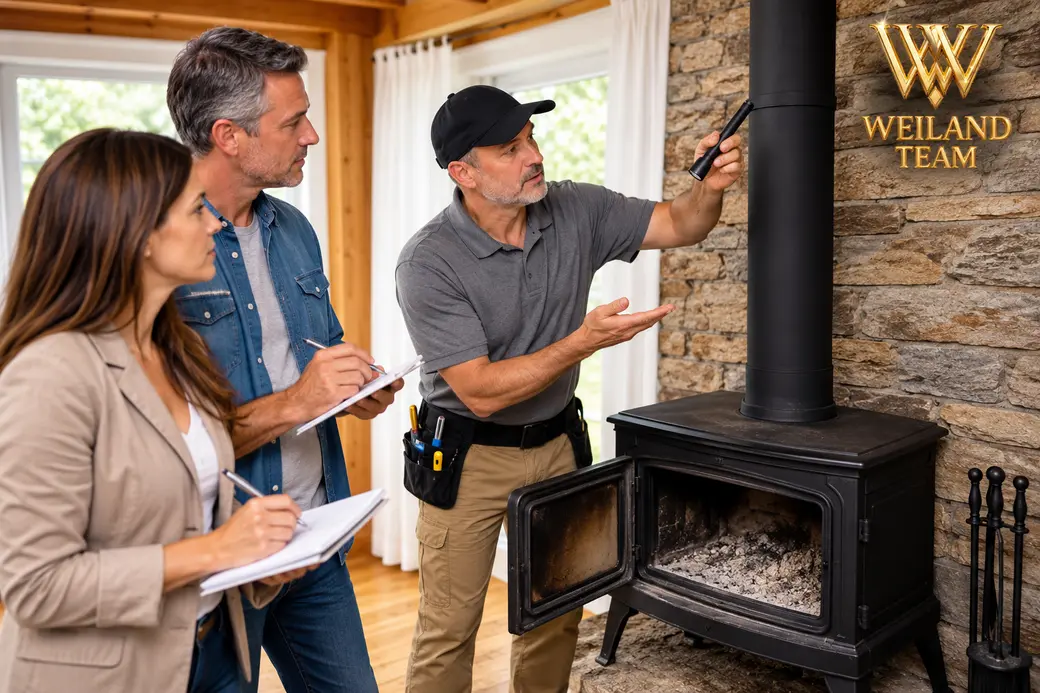
A fireplace or wood stove can be one of the most appealing features of a Muskoka cottage, but it may also be important to your insurance company.
A conventional home inspection should not automatically be considered equivalent to a WETT inspection.
Depending on the property and your insurer's requirements, you may need an appropriately qualified professional to inspect the wood-burning system.
Information about WETT inspections and qualified professionals is available through Wood Energy Technology Transfer (WETT).
A Standard Home Inspection Does Not Necessarily Include the Septic System
This is one of the most important distinctions for Muskoka buyers.
Many waterfront homes and cottages rely on private septic systems rather than municipal sewers. Do not assume that a conventional home inspection provides a complete evaluation of that system.
Depending on the property, your due diligence may include investigating:
- The age of the septic system
- Available permits and records
- Tank and system capacity
- The number of bedrooms associated with the approved system
- The location of the tank and leaching bed
- Pumping and maintenance history
- Visible or reported signs of problems
- Whether further inspection by a qualified septic professional is appropriate
One issue we pay particular attention to is the relationship between the number of bedrooms being represented and the septic system serving the property.
If a cottage is being used as a five-bedroom property, for example, buyers should not simply assume that the septic system was designed or approved for five bedrooms.
Septic replacement or upgrading can be a significant expense, so understanding the system before becoming firmly committed can be extremely important.
Well and Lake-Water Systems May Require Separate Testing
Many Muskoka properties obtain their water from a private well or directly from the lake.
A conventional home inspection does not necessarily include comprehensive water-quality testing.
Depending on the property, buyers may want to investigate:
- The source of the water
- Well information where applicable
- Pumps and pressure systems
- Filtration equipment
- UV treatment
- Water softeners or other treatment equipment
- Winterization
- Water quality
The Government of Ontario provides information about private well water and water testing.
Buyers should understand both the quality of the water and how the property's water system operates.
What About Docks and Boathouses?
Docks and boathouses are often among the most valuable and appealing components of a Muskoka waterfront property.
However, buyers should not assume that a conventional home inspection includes a comprehensive structural, legal or regulatory assessment of these waterfront structures.
Depending on the property, questions may include:
- What is the visible condition of the dock or boathouse?
- Are there permits or drawings available?
- Have additions or alterations been made?
- Does the structure appear on an available survey?
- Are there electrical systems serving the boathouse?
- Is additional investigation appropriate?
Municipal and regulatory requirements can vary by property and location. When questions arise, buyers should consult the appropriate municipality, lawyer or other qualified professional.
Existing Does Not Necessarily Mean Approved
This is an important principle when purchasing an older Muskoka property.
A deck, bunkie, addition, bedroom, dock or boathouse may have existed for many years. That fact alone does not establish that all necessary permits or approvals were obtained.
A home inspector is evaluating the physical condition of accessible components. The inspection should not be assumed to confirm zoning compliance, building permits, legal use or municipal approvals.
Those questions may require separate due diligence involving the municipality, your lawyer, a planner, surveyor or another appropriate professional.
Renovations and Additions Deserve Questions
Many Muskoka cottages have wonderful histories. They may have begun as relatively modest seasonal cottages and been expanded several times as families grew and ownership changed.
If a property has significant additions or renovations, buyers may want to ask:
- When was the work completed?
- Who completed it?
- Were building permits obtained where required?
- Are final inspection records available?
- Was electrical work appropriately completed?
- Are drawings, invoices or warranties available?
The absence of documentation does not automatically mean there is a problem, particularly with very old properties, but it can identify an area where further investigation may be appropriate.
Inspecting a Cottage Is Also About Learning How It Works
A good inspection can provide more than a list of deficiencies.
It can be an opportunity to learn about the property.
Ask questions such as:
- Where is the main water shutoff?
- Where is the electrical panel?
- How is the water system operated?
- Where is the septic tank?
- What equipment requires regular servicing?
- Are there filters that need replacement?
- What should be monitored over time?
- Are there systems requiring winterization?
For a first-time cottage buyer, this information can be particularly valuable.
What Happens If the Inspector Finds a Problem?
Finding an issue does not automatically mean the transaction is over.
The appropriate next step depends on the nature of the concern and the terms of your Agreement of Purchase and Sale.
In some situations, the inspector may be able to explain that an item is routine maintenance. In others, you may need a specialist to determine the extent of the issue and likely cost of addressing it.
Depending on your agreement and circumstances, the information discovered may affect your decision about whether to proceed or whether further discussion with the seller is appropriate.
Your Realtor and lawyer can help you understand the contractual options available to you. Technical questions should be directed to the appropriate qualified professional.
Do Not Use the Inspection Simply as a Renovation Wish List
An inspection is intended to help you understand the condition of the property, not to transform an older cottage into a new one at the seller's expense.
There is a meaningful difference between discovering a significant previously unknown concern and deciding that you would prefer newer finishes, different fixtures or upgrades to older but functioning components.
Keeping that distinction in mind can help buyers evaluate inspection findings realistically.
Consider the Age and Character of the Property
A 70-year-old cottage should not necessarily be evaluated as though it were built last year.
Older cottages can have tremendous character, beautiful locations and construction details that buyers love. They may also have systems and materials from different periods of the property's history.
The objective of due diligence is not to eliminate every imperfection. It is to understand what you are buying and determine whether the property's condition, anticipated maintenance and potential future investment are comfortable for you.
Insurance Should Be Investigated During Due Diligence
Do not assume that because the seller currently has insurance, you will automatically obtain identical coverage.
Your insurer may ask about:
- Electrical systems
- Wood-burning appliances
- Heating
- Seasonal or year-round use
- Private road access
- Distance from fire protection
- Periods when the property will be vacant or unoccupied
- Plumbing and water systems
- Previous claims or property conditions
If the inspection identifies something that could affect insurability, investigate it before becoming firmly committed whenever your agreement allows.
Our Own Cottage Experience Taught Us an Important Lesson
Mark and Dee Dee know firsthand how quickly a winter problem at a cottage can become expensive.
At one of our properties, the power went out during the dead of winter. The security system did not notify the monitoring service that the cottage had lost power. Without heat, the plumbing froze.
The resulting damage meant replacing pipes, and relatively new sinks, toilets and other plumbing fixtures were affected by the freezing and water damage.
We were extremely grateful that we had appropriate insurance coverage.
That experience is one reason we encourage buyers to think beyond the inspection itself. Understand how the cottage operates when you are not there, what happens during a power failure, whether monitoring systems have backup capability, what your insurance company requires and whether someone should physically check the property during extended winter absences.
A cottage can be monitored by technology, but our own experience taught us that technology should not necessarily be the only safeguard.
A Home Inspection Is Only One Part of Muskoka Due Diligence
This may be the most important takeaway from this article.
A home inspection can provide valuable information about the physical condition of a property, but purchasing waterfront real estate can require investigation beyond the building itself.
Depending on the property, due diligence may also involve:
- Septic systems
- Water quality and water systems
- WETT inspections
- Insurance
- Surveys
- Shore road allowances
- Rights-of-way and easements
- Private road access
- Building permits
- Zoning
- Docks and boathouses
- Electrical or structural specialists
- Financing and appraisal requirements
The professionals required will depend entirely on the property and the questions that arise.
Frequently Asked Questions About Muskoka Home Inspections
Should I get a home inspection when buying a cottage in Muskoka?
A home inspection can be an important part of a buyer's due diligence. Whether an inspection condition or other investigation is appropriate depends on the property, transaction and terms of the offer. Buyers should discuss their circumstances with their Realtor and lawyer.
How long does a cottage home inspection take?
The time required depends on the size, age, condition and complexity of the property as well as the inspector's scope of work. A substantial waterfront property with multiple buildings may require more time than a conventional residential home.
Should I attend the home inspection?
When practical, attending can be very helpful. It allows you to see what the inspector is discussing, ask questions and learn how important systems in the property operate.
Does a home inspection include the septic system?
Do not assume that it does. A private septic system may require separate investigation by an appropriately qualified septic professional or municipal authority.
Does a home inspection include water testing?
Not necessarily. Water-quality testing is generally a separate process and may be appropriate when the property is supplied by a private well or lake-water system.
Does a home inspection include a WETT inspection?
A conventional home inspection should not automatically be considered a WETT inspection. Buyers should determine whether separate inspection or documentation for a wood-burning appliance is appropriate and whether their insurer has specific requirements.
Will a home inspector tell me whether a boathouse is legal?
A home inspection should not be relied upon to establish whether a boathouse, dock, addition or other structure complies with zoning, permits or other regulatory requirements. Those matters may require municipal records, legal advice, surveys or other specialized investigation.
What if the inspection finds a serious problem?
The appropriate response depends on the issue and the terms of your Agreement of Purchase and Sale. Further investigation by a qualified professional may be appropriate before deciding how to proceed. Your Realtor and lawyer can advise you about the contractual options available.
Does an inspection guarantee that nothing will go wrong after closing?
No. A home inspection is generally based on visible and accessible conditions at a particular point in time. It cannot predict every future failure or identify every concealed condition.
Should I still inspect a cottage that appears beautifully renovated?
Appearance alone does not reveal the condition of every system or component. Renovated properties can still have older foundations, plumbing, electrical systems, septic systems or other components that deserve investigation.
Buying a Home or Cottage in Muskoka?
For us, a home inspection is not simply another box to check before closing.
It is one part of understanding what you are actually buying.
At the Weiland Team, we encourage our buyers to look beyond the beautiful view and ask questions about the property itself — the cottage, septic system, water source, access, waterfront structures, permits, insurance and the practical realities of ownership.
We have owned property in Muskoka ourselves and have experienced firsthand some of the unexpected things that can happen with cottage ownership. That personal experience is one reason we believe informed buyers are better prepared buyers.
We are not home inspectors, engineers, septic professionals, lawyers or insurance brokers, and we do not try to replace those experts. Our role is to help identify the questions that should be asked and encourage our clients to bring in the appropriate professionals when specialized expertise is needed.
The goal is not to find a perfect cottage. It is to understand the cottage you are buying so you can decide whether it is the right property for you and your family.
Your Muskoka Dream Starts With The Weiland Team.
Weiland Team | eXp Realty
Luxury Muskoka Real Estate
Muskoka • Lake of Bays • Georgian Bay and surrounding cottage country
LuxuryMuskokaRealEstate.com
This article is intended for general educational information only and is not legal, building, engineering, environmental, inspection, insurance or financial advice. Every property and transaction is different. Buyers should obtain advice specific to the property and their circumstances from the appropriate qualified professionals.
Categories
Recent Posts