

GET MORE INFORMATION
What Buyers Need to Know About Buying a Cottage with a Guest House, Bunkie, or Boathouse in Muskoka
What Buyers Need to Know About Buying a Cottage with a Guest House, Bunkie, or Boathouse in Muskoka
For many Muskoka buyers, one of the most appealing features of a cottage property is having additional space for family and guests.
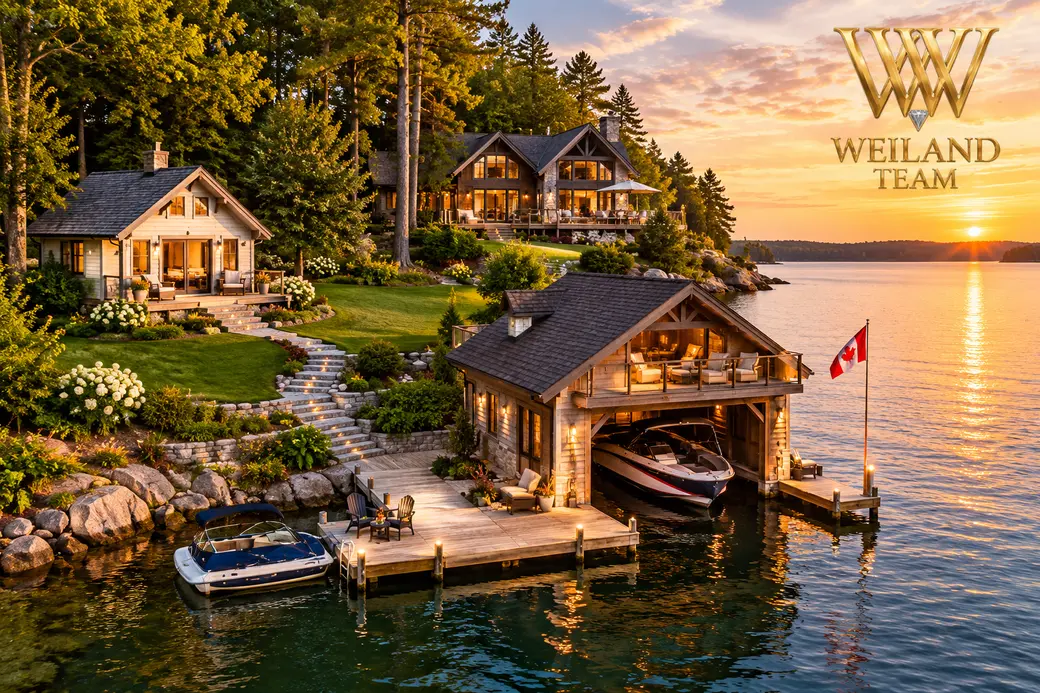
That might mean a separate guest house, a traditional bunkie, a sleeping cabin or a boathouse with living space above.
These extra structures can add tremendous lifestyle value to a cottage.
They can provide privacy for guests, space for children and grandchildren, additional sleeping areas and flexibility for extended family gatherings.
But buyers should not assume that every existing structure is automatically legal, permitted for sleeping or replaceable in the future.
For buyers considering waterfront property throughout Muskoka Lakes, Lake of Bays, Huntsville, Bracebridge, Gravenhurst and the surrounding Muskoka region, understanding what these structures are approved for can be an important part of due diligence.
Guest House, Bunkie and Boathouse Are Not Interchangeable Terms
Buyers often use these terms casually, but from a planning and building perspective they may describe very different structures.
A property might have:
- A detached guest house
- A sleeping cabin or bunkie
- An accessory building without sleeping accommodation
- A one-storey boathouse
- A two-storey boathouse with approved living or sleeping space
- A structure that has been converted from its original permitted use
The name used in a real estate listing does not determine the legal use of the building.
The important question is:
What was the structure actually approved and permitted for?
Do Not Assume That Existing Means Approved
An older Muskoka cottage may have structures that have existed for decades.
That does not necessarily mean every structure was constructed with a permit, approved for its current use or compliant with today's planning rules.
This is particularly important when a bunkie, guest house or second-floor boathouse is being counted as sleeping accommodation.
If the additional sleeping space is important to your purchasing decision, buyers should investigate the history of the structure rather than relying solely on how it is currently furnished or described.
Municipal Records Can Help Buyers Understand What Is Approved
Depending on the municipality, building and planning records may help confirm the history of structures on the property.
For example, the Township of Muskoka Lakes Planning Department offers a Municipal Record Search that can provide information about issued building permits, inspection status, outstanding orders, zoning, permitted uses and planning approvals.
For buyers, this kind of information can be particularly valuable when a property includes several accessory structures.
Your lawyer and other appropriate professionals can also help determine which records should be reviewed before purchasing.
A Bunkie May Not Automatically Be Approved for Sleeping
A small detached building near a cottage may look exactly like a guest bunkie.
It may contain beds, furniture and even electrical service.
But appearance does not establish legal use.
Planning regulations can distinguish between an accessory building and a structure permitted for habitable or sleeping space.
Buyers should therefore determine whether the structure is actually approved for the use they expect.
This becomes particularly important if the additional sleeping capacity is one of the reasons you are willing to pay more for the property.
Boathouse Living Space Requires Special Attention
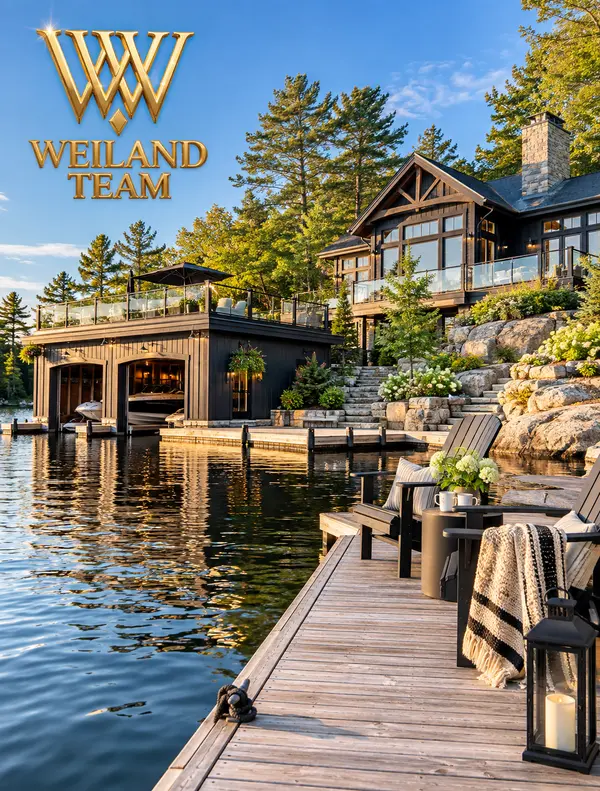
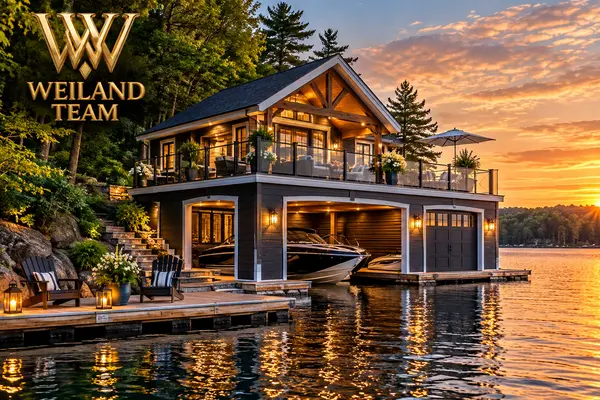
A two-storey boathouse can be one of the most desirable features of a Muskoka waterfront property.
Second-floor space overlooking the lake can provide spectacular guest accommodation and an exceptional cottage experience.
But boathouse rules vary by municipality, lake category, lot frontage and other site-specific factors.
The current Township of Muskoka Lakes Official Plan, for example, contains specific policies governing one- and two-storey boathouses, including where certain boathouses may be permitted and requirements relating to lot frontage and shoreline structures.
That means buyers should not assume that because a neighbouring property has a two-storey boathouse, the property they are considering can necessarily have one as well.
Replacing an Existing Boathouse May Not Be Straightforward
An older boathouse may be perfectly functional today, but buyers should think ahead.
If the structure eventually requires major repair or replacement, current regulations may be different from those that applied when it was originally built.
The Township of Muskoka Lakes Building Department advises property owners that dock and boathouse projects can require municipal building permits as well as additional approvals from other agencies where applicable.
For buyers, that means future rebuilding rights should be investigated rather than assumed.
The Original Shore Road Allowance Can Affect Boathouse Projects
Another Muskoka-specific issue is the Original Shore Road Allowance, commonly called the OSRA or shore road allowance.
In some locations, the strip of land along the shoreline may still be municipally owned rather than forming part of the cottage owner's title.
In July 2026, the Township of Muskoka Lakes confirmed that its updated policy requires ownership of the Original Shore Road Allowance before a building permit can generally be issued for a new boathouse, although an eligible conditional-permit process may sometimes be available while an approved OSRA purchase is being completed.
For buyers considering a property with a boathouse or future boathouse plans, confirming the status of the shore road allowance can therefore be very important.
More Sleeping Space Can Affect the Septic System
This is one of the most important practical considerations.
A cottage may appear to provide sleeping accommodation for a large family because it has bedrooms in the main cottage plus a bunkie or guest house.
But the septic system may not necessarily have been designed for that level of occupancy.
Buyers should understand the approved capacity of the sewage system and whether additional sleeping areas were considered when the system was designed or upgraded.
A beautiful guest bunkie does not solve the problem if the property's infrastructure was designed for significantly fewer occupants.
We Have Seen Why Septic Capacity Matters
In our own experience helping Muskoka buyers, we have encountered situations where the cottage itself provided more bedrooms than the septic system was designed to accommodate.
In one instance, a cottage was being used as a five-bedroom property while the existing septic system had been designed for only three bedrooms.
That can become a significant issue because increasing legitimate sleeping capacity may ultimately require changes to the septic system.
This is why we encourage buyers to look at the entire property as one system rather than simply counting beds and rooms.
Guest Accommodation Can Add Significant Lifestyle Value
When properly approved and well designed, additional accommodation can be one of the best features of a Muskoka property.
A guest house or bunkie can allow:
- Adult children to have privacy
- Grandchildren to have their own space
- Friends to stay comfortably
- Multiple generations to vacation together
- Owners and guests to maintain some separation
For families looking for a legacy cottage, these spaces can be particularly valuable.
Consider How Far the Guest Space Is From the Main Cottage
Location matters as much as the existence of the building.
A bunkie immediately beside the cottage provides a very different experience from a guest house located farther away on a large lot.
Consider:
- Privacy
- Nighttime access
- Stairs and terrain
- Bathroom access
- Heating and cooling
- Water supply
- Internet and Wi-Fi
- Accessibility for older family members
The space should work for the people who will actually be using it.
Ask Whether the Guest Space Is Seasonal or Four-Season
A summer bunkie may be perfect for July and August.
It may be much less useful during Thanksgiving, Christmas or winter weekends.
If year-round use matters, buyers should investigate:
- Insulation
- Heating
- Water supply
- Plumbing
- Electrical service
- Winter accessibility
Again, the fact that a structure exists does not necessarily mean it was designed or approved for four-season accommodation.
Think About Bathroom Facilities
A bunkie with several beds may sound ideal until everyone needs to walk to the main cottage during the night.
Buyers should understand whether the guest structure has plumbing, whether plumbing is permitted and how the space functions in everyday use.
Adding a bathroom later may involve building, septic and planning considerations.
Do Not Assume You Can Add Another Structure Later
If a property does not currently have a bunkie or guest house, buyers should not automatically assume there is room to build one.
Future development may depend upon:
- Zoning or Community Planning Permit rules
- Lot coverage
- Setbacks
- Waterfront setbacks
- Existing structures
- Lot size and frontage
- Septic capacity
- Environmental constraints
Before purchasing a property specifically because you plan to add guest accommodation later, confirm whether that plan is realistically possible.
Short-Term Rental Use Is a Separate Question
Some buyers may wonder whether a bunkie, guest house or second-storey boathouse could be rented separately.
That should never be assumed.
Short-term rental rules vary by municipality and may regulate occupancy, licensing and how different buildings on a property can be rented.
For example, the Township of Muskoka Lakes Short-Term Rental Accommodation program currently treats bunkies, sleeping cabins and second-storey boathouses as part of the premises and restricts operators from renting separate buildings to different rental groups at the same time.
If rental income is part of your purchasing plan, municipal rules should be investigated carefully before buying.
Insurance Should Be Considered Too
Additional buildings can affect insurance requirements.
Buyers should disclose all structures and their intended uses to their insurer and confirm that guest accommodation, boathouses and other accessory buildings can be appropriately insured.
The construction, heating source, age and condition of the structures may all matter.
Look Beyond the Number of Beds
Real estate marketing sometimes emphasizes the number of people a cottage can accommodate.
For buyers, the better questions are:
- How many bedrooms are legally recognized?
- What is the approved septic capacity?
- Which accessory buildings are permitted for sleeping?
- Are the structures properly permitted?
- Can they be rebuilt if necessary?
- Are they seasonal or year-round?
- How will our family actually use them?
Those answers provide a much clearer picture of the property's true functionality.
Frequently Asked Questions About Guest Houses, Bunkies and Boathouses in Muskoka
Can every Muskoka cottage have a bunkie?
No. Whether an additional accessory or sleeping structure is permitted depends on the municipality, zoning or planning rules, lot configuration, existing development, setbacks, lot coverage, septic capacity and other property-specific considerations.
Can I sleep in an existing bunkie?
That depends on what the structure was approved for. A building that is furnished as
Categories
Recent Posts