

GET MORE INFORMATION
Can You Add a Bunkie, Guest Cottage, or Second Dwelling to a Muskoka Waterfront Property?
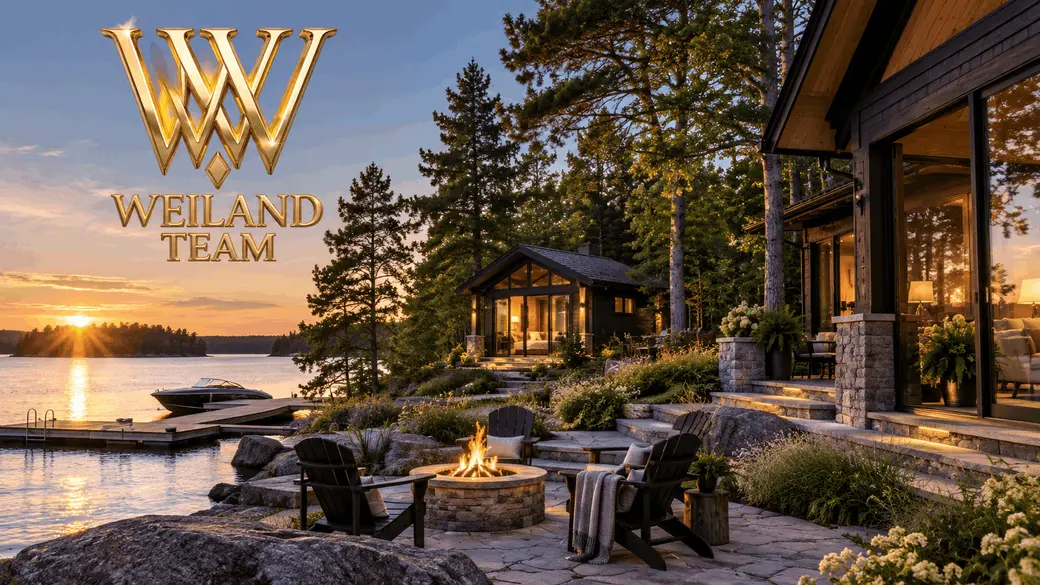
Can You Add a Bunkie, Guest Cottage, or Second Dwelling to a Muskoka Waterfront Property?
One of the most common questions we hear from buyers looking at larger Muskoka waterfront properties is deceptively simple:
“Can we add another place for family and guests to stay?”
For some families, that means a small bunkie tucked into the trees. For others, it means a more substantial guest cottage, additional dwelling unit, accommodation above a garage, or perhaps a second dwelling for children, grandchildren or aging parents.
The answer can be yes — but not automatically.
In Muskoka, the ability to add additional sleeping or living accommodation can depend on the municipality, zoning, lot area, waterfront frontage, existing buildings, lot coverage, setbacks, shoreline characteristics, servicing, septic capacity and exactly what type of structure you are proposing.
That is why Mark & I encourage buyers to investigate future development plans before purchasing the property, rather than assuming that a large waterfront lot provides the right to add another building later.
What Is the Difference Between a Bunkie, Sleeping Cabin, Guest Cottage and Second Dwelling?
The terminology can become confusing because buyers often use words such as “bunkie” and “guest cottage” conversationally, while municipal planning documents may use more specific terms such as sleeping cabin, accessory building or additional dwelling unit.
Those distinctions matter.
A small detached building intended primarily for sleeping accommodation may be treated very differently under a municipal zoning or planning framework than a fully independent dwelling containing cooking, living and sanitary facilities.
Before planning a project, buyers should determine exactly how the applicable municipality defines the proposed use.
The District Municipality of Muskoka's land-use planning resources are a useful starting point for understanding the broader Muskoka planning framework, but detailed zoning and development permissions are generally determined through the applicable area municipality.
Can You Build a Bunkie on a Muskoka Waterfront Property?
Potentially, yes. Sleeping cabins or bunkies are found on many Muskoka properties, but whether a new one is permitted — and its allowable location, size and use — depends on the rules applying to that particular property.
For example, the Township of Lake of Bays Community Planning Permit By-law contains specific provisions for sleeping cabins, including where they may be permitted, maximum floor area and restrictions involving other forms of additional accommodation.
The Township of Muskoka Lakes Planning Department similarly advises property owners to first determine their property's zoning and then consult the applicable zoning provisions to establish permitted uses, setbacks, lot coverage, building height and other development requirements.
This is an important distinction: seeing a bunkie on the neighbouring property does not necessarily mean you can build the same thing on yours.
How Big Can a Muskoka Bunkie Be?
There is no single Muskoka-wide answer.
The permitted size can depend on the municipality, zoning designation and characteristics of the property.
For example, Lake of Bays' Community Planning Permit By-law currently contains specific maximum gross floor area provisions for sleeping cabins. Other municipalities use their own zoning and planning regulations.
Rather than relying on a general rule or something you have seen on another property, confirm the current regulation for the exact property being considered.
Can a Bunkie Have a Bathroom?
This is another question that should be investigated before construction or purchase.
Adding plumbing can introduce additional Building Code, sewage-system and servicing considerations. Existing septic capacity is particularly important because additional bedrooms or accommodation may affect the requirements of the sewage system.
A beautiful bunkie is not particularly useful if the property's existing servicing cannot legally or practically support the intended use.
When buying a waterfront property with an existing bunkie, Mark & I also want to know whether the structure and any plumbing or sewage connections were properly approved.
Can a Bunkie Have a Kitchen?
This is where buyers need to be especially careful about terminology and intended use.
Adding cooking facilities may change how a building is classified under applicable planning and zoning regulations. What a buyer thinks of as a “guest bunkie” may begin functioning more like an independent dwelling.
Do not assume that because sleeping accommodation is permitted, a fully self-contained second residence is also permitted.
Before designing a kitchen, bathroom or other independent living facilities, confirm the proposed use with the applicable municipal planning and building departments.
Can You Have Two Cottages on One Muskoka Waterfront Lot?
Sometimes buyers see a large waterfront lot and immediately imagine two complete cottages — one for themselves and another for their children or guests.
That possibility should never be assumed.
A property may have enough physical land for another cottage while zoning does not permit another dwelling. Conversely, some circumstances may permit additional residential accommodation subject to specific requirements.
Lot size alone does not determine development rights.
Waterfront frontage, zoning, setbacks, lot coverage, existing development, environmental constraints and servicing can all affect what is possible.
What About an Additional Dwelling Unit?
Additional dwelling units — sometimes called ADUs — are an increasingly important part of Ontario housing policy, but waterfront properties can present different planning considerations from properties in serviced urban areas.
Buyers should not assume that general information they have heard about second suites or additional residential units elsewhere in Ontario automatically applies to a particular Muskoka waterfront lot.
For example, the Lake of Bays Community Planning Permit By-law contains specific rules governing sleeping cabins and additional dwelling units, including circumstances in which they cannot be combined on the same property.
The correct question is therefore not simply, “Does Ontario allow additional dwelling units?”
It is:
“What additional residential accommodation is permitted on this particular waterfront property?”
Does Waterfront Frontage Affect Whether You Can Add Another Building?
It can.
Waterfront frontage is one of several characteristics that can influence development potential, but it should never be considered by itself.
Municipal regulations may establish minimum lot area and frontage requirements as well as setbacks, lot coverage and other development standards.
The Township of Muskoka Lakes, for example, specifically recommends confirming lot area and frontage through a registered survey or surveyor when accurate dimensions are important for a planning application.
A property advertised as having 300, 500 or even 1,000 feet of shoreline does not automatically provide unlimited development potential.
Lot Coverage Can Be Just as Important as Lot Size
Buyers sometimes look at a large acreage number and assume there is ample room to build.
However, zoning regulations may limit how much of a property — or a particular portion near the shoreline — can be covered by buildings and structures.
Existing cottages, garages, boathouses, sleeping cabins and other structures may already consume some of the permitted lot coverage.
This is why a large property can sometimes have less additional development potential than a buyer expects.
Setbacks Matter on Waterfront Properties
Where you want to put the bunkie or guest accommodation can be just as important as whether the use itself is permitted.
Applicable regulations may establish setbacks from the shoreline, side and rear lot lines, environmentally sensitive areas and other features.
A beautiful flat area beside the lake may look like the perfect location for a guest cottage, but that does not mean it is a permitted building envelope.
Always establish where new development can legally be located before making plans around a particular site.
Can You Build a Bunkie Above a Garage?
Depending on the municipality and applicable rules, sleeping accommodation above a garage may be possible.
Again, the details matter.
For example, Lake of Bays has specific provisions addressing sleeping cabins located over garages. Other Muskoka municipalities may regulate these structures differently.
Buyers should confirm allowable height, floor area, setbacks, lot coverage, use and servicing before assuming that accommodation can simply be added above a proposed or existing garage.
Can You Put Sleeping Accommodation Above a Boathouse?
This varies significantly by municipality and property.
Some Muskoka waterfront areas have historically permitted certain forms of second-storey boathouse accommodation under specific circumstances, while other municipal rules may prohibit or tightly restrict sleeping cabins above boathouses.
For example, the current Lake of Bays Community Planning Permit By-law states that a sleeping cabin is not permitted above a boathouse.
In Muskoka Lakes, boathouse regulations vary with lake category and other zoning requirements. Buyers considering this type of accommodation should review the Township of Muskoka Lakes planning and zoning information and obtain property-specific confirmation.
This is a perfect example of why a rule that applies on one Muskoka lake or in one municipality should not be assumed to apply somewhere else.
What If the Property Already Has a Bunkie or Guest Cottage?
An existing building is not automatically a legal building.
When purchasing a property with a bunkie, guest cottage, accommodation above a garage or other secondary structure, buyers should investigate whether appropriate building permits and planning approvals were obtained.
Municipal records can be extremely helpful.
The Township of Muskoka Lakes, for example, describes its Municipal Record Search process as a way to obtain information about issued building permits, inspection status, outstanding orders, zoning, permitted uses and planning approvals.
Depending on the property and municipality, a lawyer, building professional, planner or other qualified adviser may also be appropriate.
What If an Existing Bunkie Was Built Without a Permit?
This deserves attention during due diligence.
Do not assume that an older building is automatically legal simply because it has been standing for many years.
If municipal records do not establish the appropriate approvals, further investigation may be necessary.
The outcome can depend on the history of the structure, when it was built, applicable regulations and whether the municipality has records relating to it.
This is an area where buyers should obtain appropriate professional and municipal advice rather than relying on representations or assumptions.
Do Small Bunkies Need Building Permits?
Be careful with the commonly repeated idea that a small structure automatically does not need a permit.
There are limited exemptions for certain small storage sheds, but a storage shed and a building intended for people to sleep in are not necessarily treated the same way.
The Township of Muskoka Lakes Building Department explains that building permits are required for construction covered by the Building Code Act and also notes that even accessory structures must comply with applicable zoning and other laws.
If the intended use is sleeping accommodation, confirm permit requirements before construction.
What About the Septic System?
Septic capacity can become a major consideration when buyers want to add bedrooms or additional accommodation.
The existing system may have been designed around the current cottage and its approved use.
Adding sleeping accommodation, bathrooms or another dwelling may require review of the existing sewage system and potentially an upgrade or replacement.
This is particularly important when purchasing an older cottage where additions or accessory buildings may have been created over many years.
Before assuming additional accommodation can be supported, buyers should confirm the property's sewage-system records and obtain qualified advice where appropriate.
Can You Create a Family Compound on a Muskoka Waterfront Property?
This is one of the most exciting possibilities for buyers searching for larger legacy properties.
A family may envision the main cottage for parents, a guest cottage for adult children, a bunkie for grandchildren and perhaps additional gathering spaces around the property.
Physically, the property may appear capable of accommodating all of it.
Legally, the answer may be very different.
Creating a multi-generational property requires understanding not only the land but also the zoning and development framework that applies to it.
Before paying a premium for a property because of its perceived family-compound potential, verify that the future use you are imagining is actually possible.
Can a Large Waterfront Property Be Severed Instead?
Another assumption we sometimes encounter is that extensive acreage or waterfront frontage means part of the property can eventually be severed into another building lot.
Again, frontage alone does not establish severance potential.
Consent applications can involve municipal and District planning policies, minimum lot standards, access, servicing, environmental considerations and other requirements.
The District Municipality of Muskoka Official Plan and land-use planning resources provide important regional planning context, while the applicable area municipality should be consulted regarding property-specific development and consent requirements.
Rules Differ Across Muskoka
Muskoka is not governed by one single waterfront zoning by-law.
The District Municipality of Muskoka contains six area municipalities, and the rules affecting a particular waterfront property depend on its location and applicable planning framework.
Useful official starting points include:
- District Municipality of Muskoka — Land Use Planning and Official Plan
- Township of Muskoka Lakes — Planning
- Township of Lake of Bays — Community Planning Permit By-law
- Town of Huntsville — Planning and Development
- Town of Bracebridge — Planning Services
- Town of Gravenhurst — Planning and Development
- Township of Georgian Bay — Planning
What Should Buyers Verify Before Making an Offer?
If additional accommodation is important to your decision to purchase a Muskoka waterfront property, investigate it during your due diligence rather than after closing.
Questions may include:
- What is the property's current zoning or planning designation?
- Is a sleeping cabin or bunkie a permitted use?
- Is an additional dwelling permitted?
- Can both exist on the same property?
- What is the maximum permitted floor area?
- Where can the structure be located?
- What shoreline and side-yard setbacks apply?
- How much lot coverage remains available?
- Does the existing septic system have sufficient capacity?
- Would a new or upgraded septic system be required?
- Are there environmental or site-plan constraints?
- Are existing accessory buildings legally established?
- Were building permits obtained?
- Could accommodation be located above a garage?
- Are second-storey boathouse accommodations permitted?
- Would a minor variance, planning permit or zoning amendment be required?
If the answer to one of these questions is essential to your decision to purchase, obtain reliable confirmation before proceeding without an appropriate condition.
The Weiland Team Perspective: Buy the Property You Can Actually Create
When Mark & I walk a larger Muskoka waterfront property with buyers, it is natural to start imagining possibilities.
That granite clearing could make a beautiful bunkie. The garage could potentially have guest accommodation above it. That quiet part of the property would be perfect for the grandchildren. A second cottage might allow three generations to spend summers together while still having their own space.
Those possibilities are part of the excitement of buying a Muskoka property.
But there is an important difference between imagining what fits on the land and confirming what can legally be created on the land.
If a bunkie, guest cottage or second dwelling is central to why you are buying the property, we want that question investigated before you make a major financial commitment.
A property should work not only for the Muskoka experience you want today, but also for the way your family hopes to use it in the years ahead.
Frequently Asked Questions About Bunkies and Guest Cottages in Muskoka
Can you build a bunkie on a Muskoka waterfront property?
Potentially. Whether a sleeping cabin or bunkie is permitted depends on the municipality, zoning or planning designation, lot characteristics, existing development and applicable regulations. Buyers should confirm the rules for the specific property with the appropriate municipality.
How big can a bunkie be in Muskoka?
There is no single Muskoka-wide maximum. Municipalities have their own regulations governing sleeping cabins and accessory structures, so the permitted size must be determined for the specific property.
Can a Muskoka bunkie have a bathroom?
Potentially, but plumbing and additional accommodation can create Building Code, sewage-system and servicing considerations. The proposed use and septic capacity should be confirmed with the appropriate authorities and qualified professionals.
Can a bunkie have a kitchen?
Do not assume so. Adding cooking facilities may affect how the building is classified and whether it is considered a separate dwelling rather than simply sleeping accommodation. Confirm the intended design and use with the applicable municipality before proceeding.
Can you have a bunkie and an additional dwelling unit on the same property?
It depends on the municipality. For example, the current Lake of Bays Community Planning Permit By-law states that sleeping cabins are not permitted in combination with an Additional Dwelling Unit. Other municipalities have their own rules, so property-specific confirmation is essential.
Can you build a bunkie over a garage?
It may be possible depending on the municipality and property. Lake of Bays, for example, contains specific provisions for sleeping cabins located over garages. Height, floor area, setbacks, lot coverage and other requirements may apply.
Can you put a bunkie above a boathouse?
Rules vary. Lake of Bays currently states that a sleeping cabin is not permitted above a boathouse, while other Muskoka municipalities may regulate second-storey boathouse accommodation differently. Always verify the current rules for the individual property.
Does a small bunkie need a building permit?
Do not assume that a small structure is exempt simply because of its size. Limited exemptions can apply to certain small storage sheds, but a structure intended for sleeping accommodation may have different requirements. Confirm the proposed structure with the municipal building department before construction.
Can you have two cottages on one Muskoka waterfront property?
Possibly in some circumstances, but a large lot or extensive frontage does not automatically permit a second dwelling. Zoning, existing development, lot coverage, setbacks, servicing and other planning requirements must be reviewed.
Can I add a bunkie to an older Muskoka cottage?
Possibly, but existing lot coverage, setbacks, septic capacity and the legal status of existing buildings should be reviewed first. Older properties may also contain structures built under previous regulations, making municipal record research particularly important.
Can I buy a property assuming I will get a minor variance later?
That is risky. A variance or other planning approval is an application, not a guaranteed right. If the proposed additional accommodation is essential to the purchase, buyers should obtain appropriate planning and legal advice and structure their due diligence accordingly.
Thinking About Buying a Muskoka Property With Room for Family and Guests?
Some of Muskoka's most special properties are the ones that allow generations of a family to gather together while still giving everyone their own space.
If you are searching for a waterfront property and a bunkie, guest cottage, second dwelling or future family compound is part of your vision, the existing cottage is only one part of the evaluation.
Mark & I can help you look at the entire property — waterfront, privacy, topography, existing structures and potential — while helping identify the municipal and professional due diligence that should be completed before you make your decision.
Weiland Team specializes in Muskoka waterfront and luxury real estate throughout Lake of Bays, Muskoka Lakes, Huntsville, Bracebridge, Gravenhurst, Georgian Bay and surrounding cottage country communities.
Your Muskoka Dream Starts With Weiland Team.
About Weiland Team
Mark & I live and work in Muskoka and bring complementary experience to every waterfront transaction. Mark's decades of business ownership and negotiation experience, combined with my background in interior design, professional staging and luxury real estate, allow us to evaluate properties from both a strategic and lifestyle perspective.
As members of eXp Luxury and the Luxury Sports & Entertainment division, we understand the discretion, responsiveness and elevated level of service expected by luxury clients, whether they live locally, elsewhere in Canada or around the world.
Our goal is not simply to help you buy or sell a cottage. It is to help you make an informed decision about a property that may become part of your family's Muskoka story for generations.
Weiland Team | eXp Realty
Luxury Muskoka Real Estate
Serving Muskoka, Lake of Bays, Muskoka Lakes, Georgian Bay and surrounding waterfront communities
Planning, zoning, building and sewage-system requirements can change and vary by municipality and individual property. Information in this article is general in nature and should not be interpreted as legal, planning, building or engineering advice. Buyers contemplating additional accommodation or development should confirm current requirements directly with the applicable municipality and appropriate qualified professionals.
Categories
Recent Posts